Download my Whitepaper here:
By clicking submit, you agree to receive promotional emails and weekly content from Company.

When You Should NOT Hire a Business Coach
Wednesday, November 04, 2026

A coach telling you not to hire a coach. Yes, really. Here are the situations where coaching is the wrong spend, what to do instead, and how to tell when the time is right.
You're tired. The business depends on you for everything. Someone on LinkedIn says a coach changed their life, and you're half tempted to book a call just to feel like you're doing something about it.
Before you do, let me give you an answer most coaches won't: there are times when not to hire a business coach is the smart decision. Hiring one at the wrong moment wastes money, burns your confidence in outside help, and can leave you more stuck than before.
I run Business Simplified, which sells coaching to founder-led UK SMEs. So yes, I'm arguing against my own sales here. I'd rather you hire a coach at the right time, or never, than hire one at the wrong time and decide the whole idea is rubbish.
In this blog I'll cover seven signs you don't need a business coach yet, the red flags in coaches themselves, what to do instead, and a quick check to tell you when it is the right time.
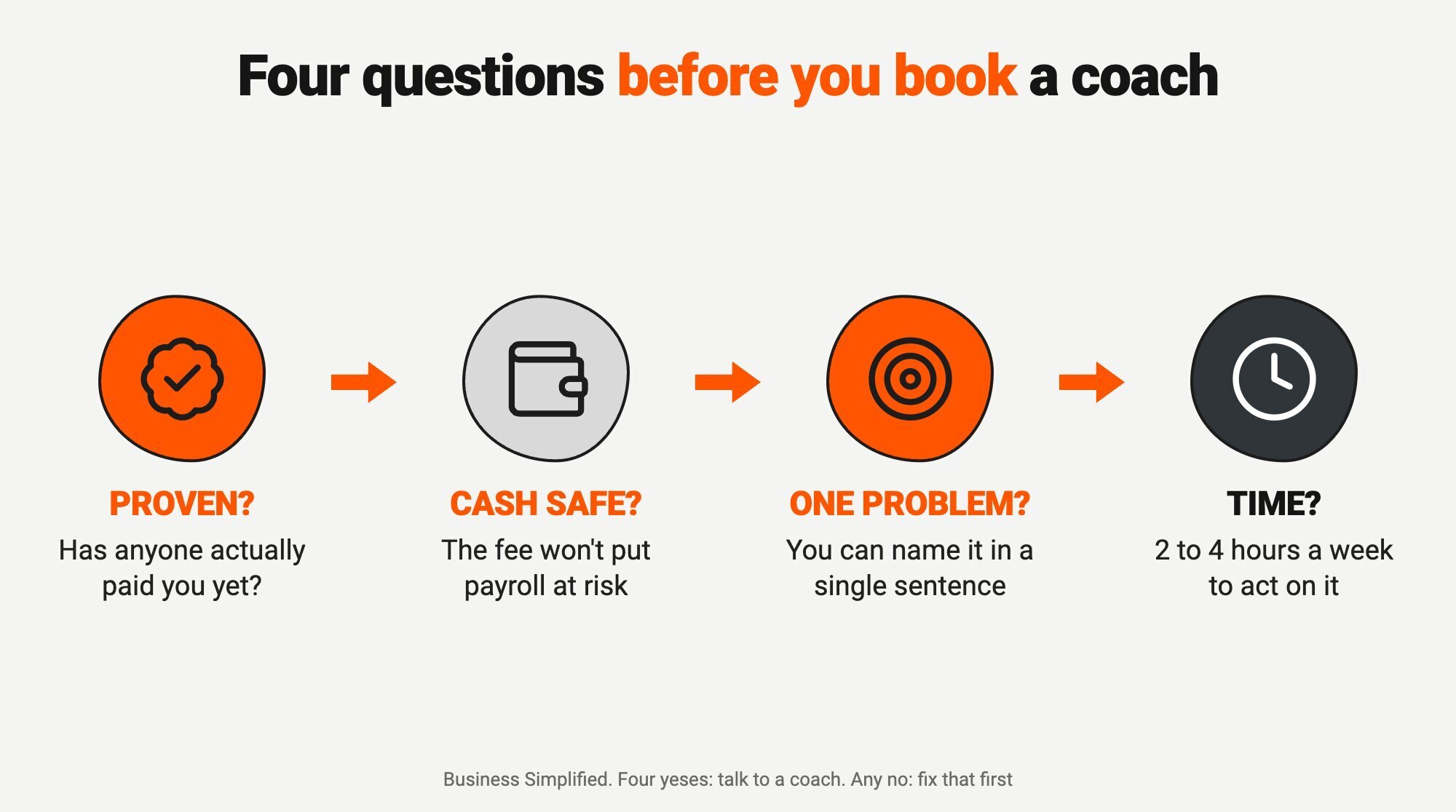
When not to hire a business coach: seven honest signs
1. You haven't proven anyone will pay
If you're still testing whether there's a market for what you do, coaching on growth is premature. You don't need a system for scaling something that isn't selling yet. You need conversations with customers. Lots of them.
2. Cash is critically tight
One UK coach's pricing guide puts 3 to 6 month coaching packages at £3,000 to £15,000. If paying that means you might miss payroll, don't. Stress makes for bad decisions, and coaching sessions spent worrying about the overdraft rarely move anything forward. Stabilise cash first.
3. You know exactly what to do and you're avoiding it
Sometimes we hire help so we can feel busy without facing the hard thing. If you already know you need to let someone go, raise your prices or drop a bad client, you don't need a coach to tell you. You need to do it.
4. You want someone to do the work for you
A coach won't write your proposals, run your marketing or close your deals. If that's what you need, you're looking for a hire, a consultant or an agency. I explain the difference in business coach vs consultant vs mentor.
5. You have zero time to implement
Coaching produces actions. If your diary has no room for them, they'll pile up and you'll feel worse each session. Free up even a couple of hours a week before you start, or wait.
6. Your problem is a single technical fix
Need a new website, a bookkeeping clean-up or a CRM set up? That's a specialist job, not a coaching problem. Hire the specialist. If it's the CRM, my guide to the best CRM for a small UK business will save you a few weeks of research.
7. You're not willing to hear uncomfortable things
Good coaching is often uncomfortable. If you want reassurance more than challenge, you'll either pick a coach who flatters you or fall out with one who doesn't. Neither helps.
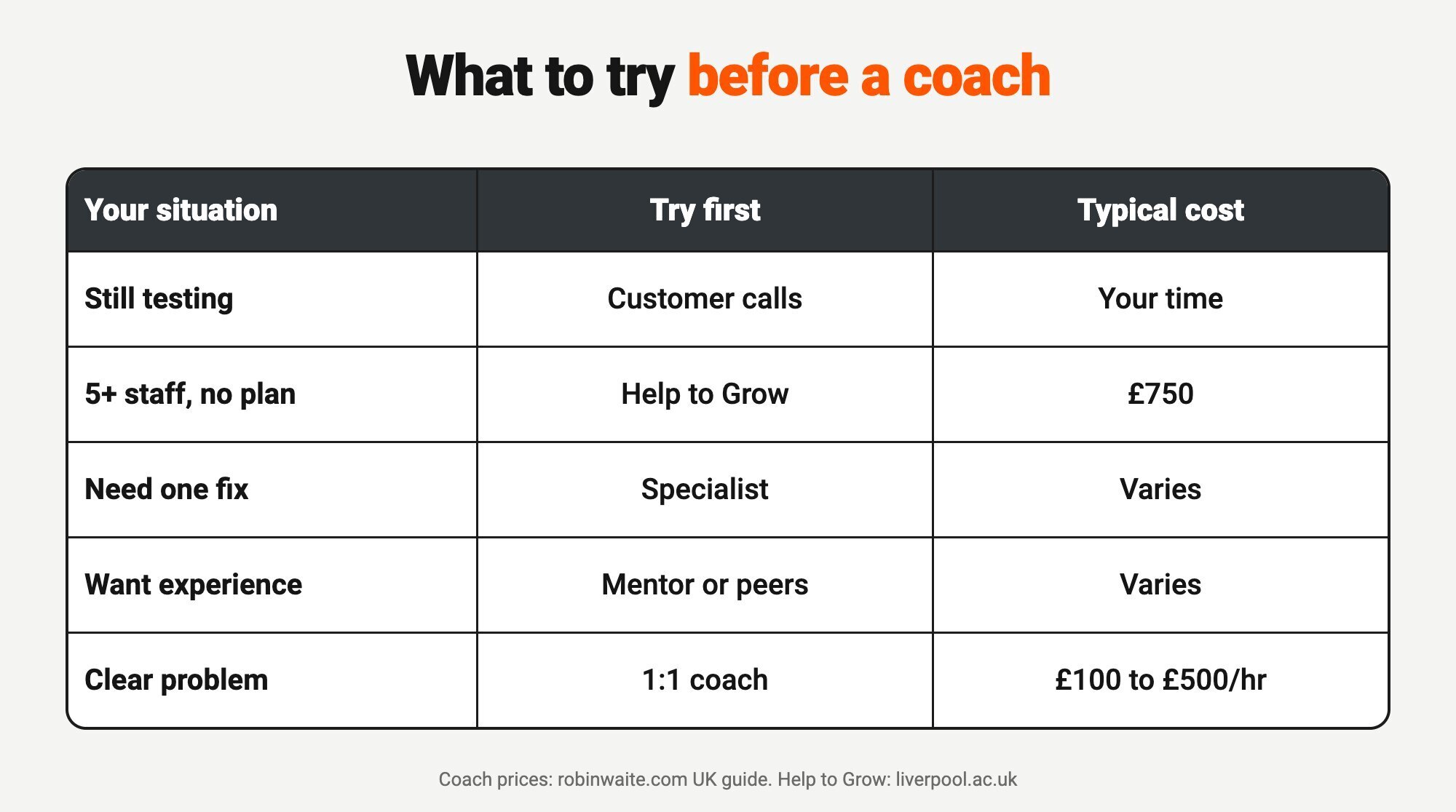
Not ready for a coach? Start here
The Growth Engine shows the three growth ceilings 86% of UK owners hit, plus the five growth profiles. It will tell you whether your problem is market, message or machine, before you pay anyone.
Business coach red flags to watch for
Even when the timing is right, the coach might not be. These are the red flags I'd look out for:
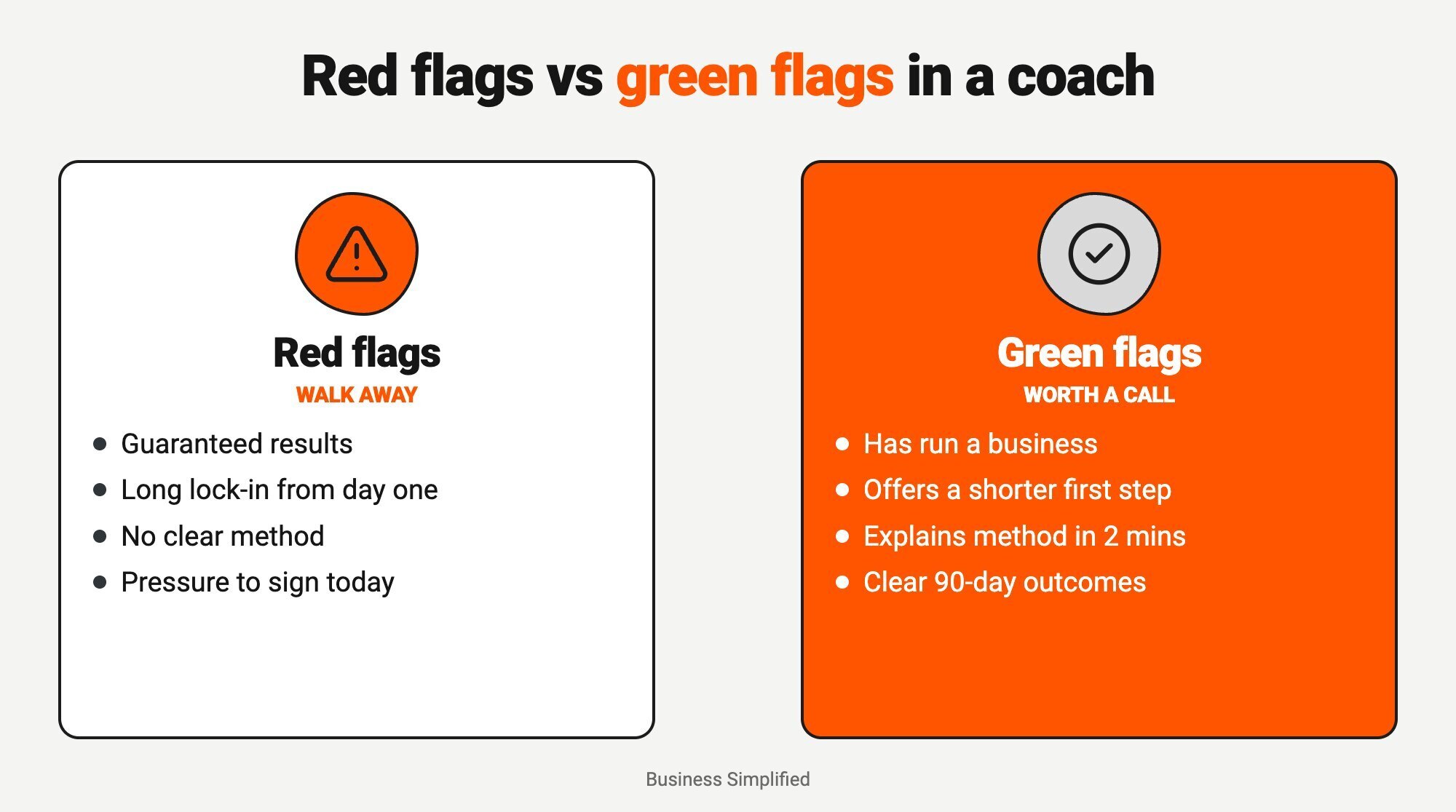
- They've never run a business like yours. Coaching qualifications are fine, but if they've never had to make payroll or win a client, ask how they'll help you do either.
- Guaranteed results. Nobody can guarantee your revenue. Anyone who does is selling, not coaching.
- Long lock-in contracts from day one. A confident coach will usually offer a shorter first step.
- No clear method. Ask them to explain their process in two minutes. If they can't, there probably isn't one.
- Vague outcomes. "Clarity" and "mindset" are nice. What will actually be different in 90 days?
- Pressure to sign on the first call. Good coaches want clients who will succeed, not just clients.
What to do instead of hiring a business coach
If you've ticked a few of the signs above, here's where I'd put your time and money instead.
Read the right books
Cheap, fast and surprisingly effective if you actually apply them. Start with my list of the best business growth books for founders.
Try a structured programme
If you have staff, Help to Grow: Management is hard to beat on price. It costs £750, is 90% government funded, runs as 12 weekly sessions and is open to businesses with 5 to 249 staff, according to the University of Liverpool's course page. I've written an honest Help to Grow Management review, and there are other options in my guide to the best business growth programmes in the UK.
Find a mentor or a peer group
Someone a few years ahead of you can be more useful than a coach early on. Peer groups give you honest feedback from people in the same boat.
Talk to your best customers
This one costs nothing and most founders skip it. Ring five of your favourite clients and ask three questions. Why did you pick us? What nearly stopped you? What would you tell a friend about us? The answers will tell you more about your market and your message than any coaching session, and you'll use them for years. If you do hire a coach later, you'll walk in with real evidence instead of guesses.
Give yourself a deadline
Waiting isn't the same as drifting. Pick a date, say 90 days from now, and decide what needs to be true by then for coaching to make sense. More cash in the bank, a clearer problem, a bit of diary space. When the date comes, check honestly.
Fix your lead generation basics
For most founders turning over £100k to £5m, the real issue is that sales depend on them. In The Growth Engine, 77% of the 186 UK owners we surveyed still personally win most of their new business (Business Simplified survey of 186 UK business owners, 2026). You can make a start on that yourself with how to create a lead generation process.
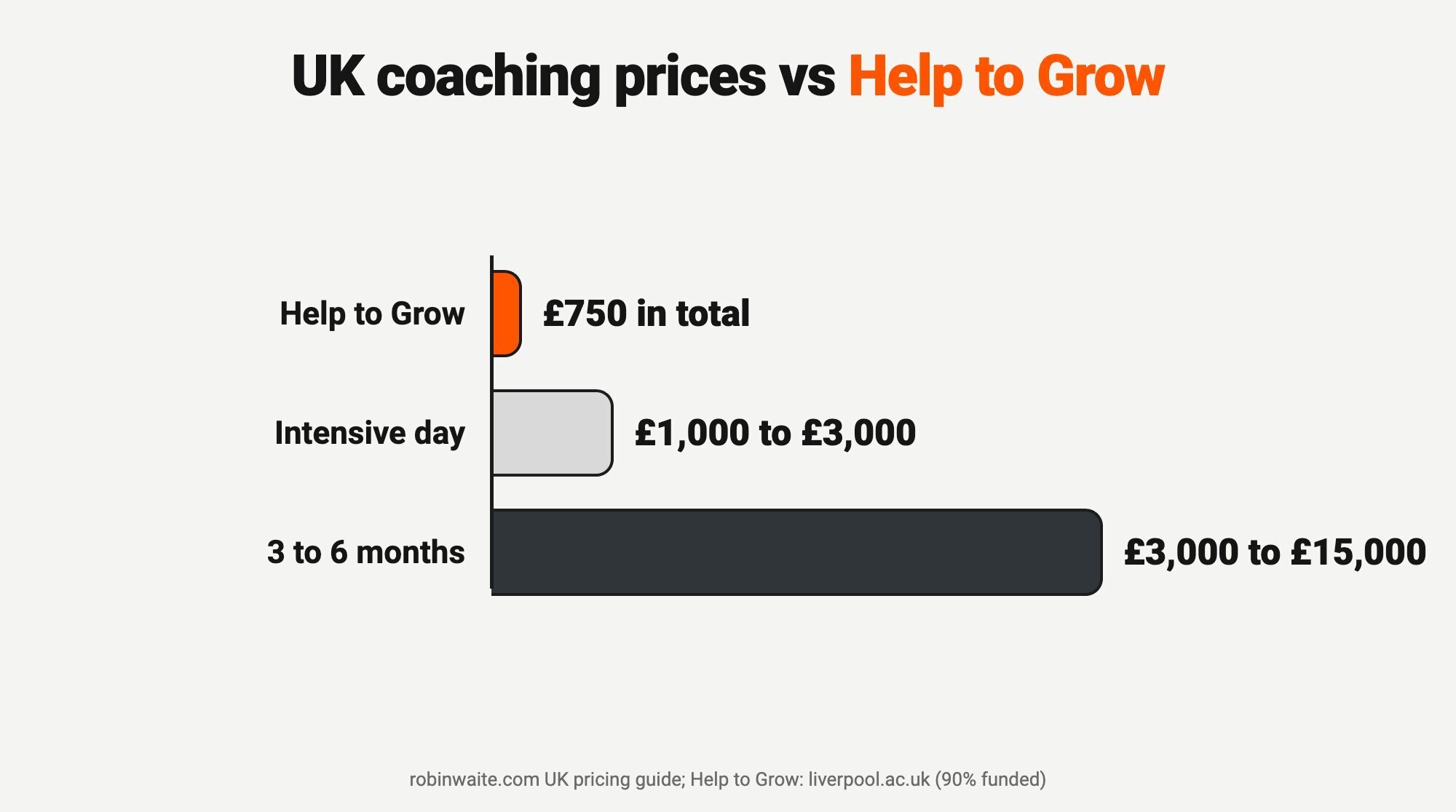
Do I need a business coach? When the time is right
Flip the signs above and you get a decent picture of when coaching does make sense:
- The business is proven and profitable enough that the fee won't keep you up at night.
- You've hit a ceiling and you've tried the obvious fixes.
- You can name the problem and roughly what solving it is worth.
- You'll protect time each week to act on it.
- You want a system and a challenge, not a cheerleader.
If that's you, read my honest answer to is business coaching worth it, and check what's a fair price in how much a business coach costs in the UK.
Full disclosure: our own first step is a £97 Business Review, a paid call to work out where you're stuck and whether coaching is even the right answer. Sometimes it isn't, and I'll say so.
What to fix before you hire a business coach
If you're close but not quite there, sort these first. You'll get far more from a coach when you do hire one:
- Know your numbers. Revenue, gross margin, cash in the bank, where new work comes from.
- Write down your biggest problem. One sentence. Not five.
- Clear some diary space. Two to four hours a week, protected.
- Set a budget you can afford to lose. Not because it will be lost, but so fear doesn't drive your decisions.
Knowing when not to hire a business coach is just as useful as knowing when to hire one. Sometimes the best move is to wait, build a bit more, and come back when you can get real value from it. For more straight talk like this, browse the Honest Truths series or read why 98% of UK businesses never reach £1m.
And when you are ready to start talking to coaches, here are the red flags from earlier next to the green flags I would look for.
Frequently asked questions
How do I know if I need a business coach?
You likely need one if your business is proven, you've hit a ceiling, you can name the problem and what fixing it is worth, and you can protect time each week to act on it.
What are the red flags in a business coach?
No experience running a business like yours, guaranteed results, long lock-in contracts from the start, no clear method, vague outcomes and pressure to sign on the first call.
Should I hire a coach before £100k turnover?
Usually not. Below that point most founders get more from customer conversations, books, peers and a simple lead generation process. Save coaching for when there's something proven to grow.
Should I get a mentor or a coach first?
Early on, a mentor or peer group is often the better first step because it's cheaper and based on experience. A coach becomes more useful once you need a structured method and accountability.
What should I fix before hiring a business coach?
Know your key numbers, write down your single biggest problem, clear two to four hours a week to implement, and set a budget you can comfortably afford.
Download The Growth Engine
Whether or not now is the time to hire a coach, find out where you're really stuck. The Growth Engine is based on 186 UK business owners and covers the three growth ceilings, five growth profiles and the Market, Message and Machine framework.

Hi, we are Business Simplified
Growth shouldn’t depend on you chasing every lead. Business Simplified uses real data to fix your pipeline, increase leads and improve sales, so you can lead your business instead of being trapped running it.
Get Our Growth Engine White Paper
We surveyed 186 UK businesses to find out what growth strategies actually work
We published those findings in our "Growth Engine" whitepaper. You can get a copy here.