Download my Whitepaper here:
By clicking submit, you agree to receive promotional emails and weekly content from Company.

Help to Grow Management Review: Is It Worth It?
Wednesday, November 04, 2026

A government backed management course for £750 sounds almost too good to be true. This Help to Grow Management review looks at what you actually get, who it suits, who it doesn't, and whether it's worth twelve weeks of a busy founder's time.
You know you need to get better at running the business, not just working in it. But a one-to-one coach feels expensive, an MBA feels like a different life, and most free webinars are a sales pitch with a slide deck attached.
Then someone mentions Help to Grow: Management. Business school content, heavily subsidised, done in a few months. So what's the catch?
Full honesty first. I haven't done the Help to Grow course myself. I've got an MBA and I coach founder-led businesses, so I know what good management education looks like, but this Help to Grow Management review is based on the published details, the official evaluation figures and my opinion as someone who works with owners at this stage every week. In this blog I'll cover what it costs, who it's for, the honest pros and cons, who should NOT do it, and my verdict.
Help to Grow Management review: the short version
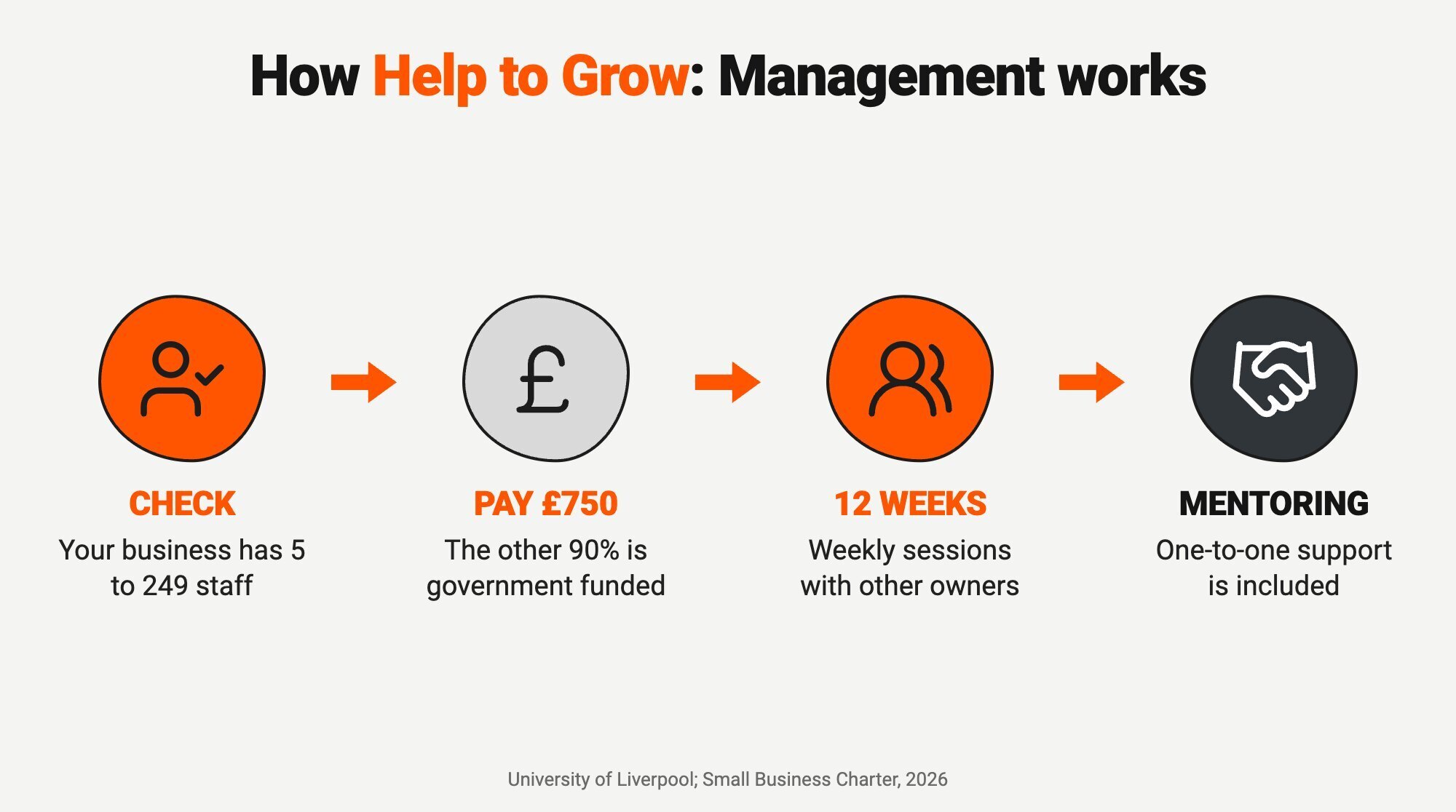
- What it is: a government backed management programme for small business leaders, delivered by UK business schools, such as the University of Liverpool Management School.
- What it costs: £750 to you, with 90% of the cost government funded. Check current pricing with your chosen provider.
- Time: 12 weekly sessions.
- Who's eligible: businesses with 5 to 249 staff (check the full criteria with the provider).
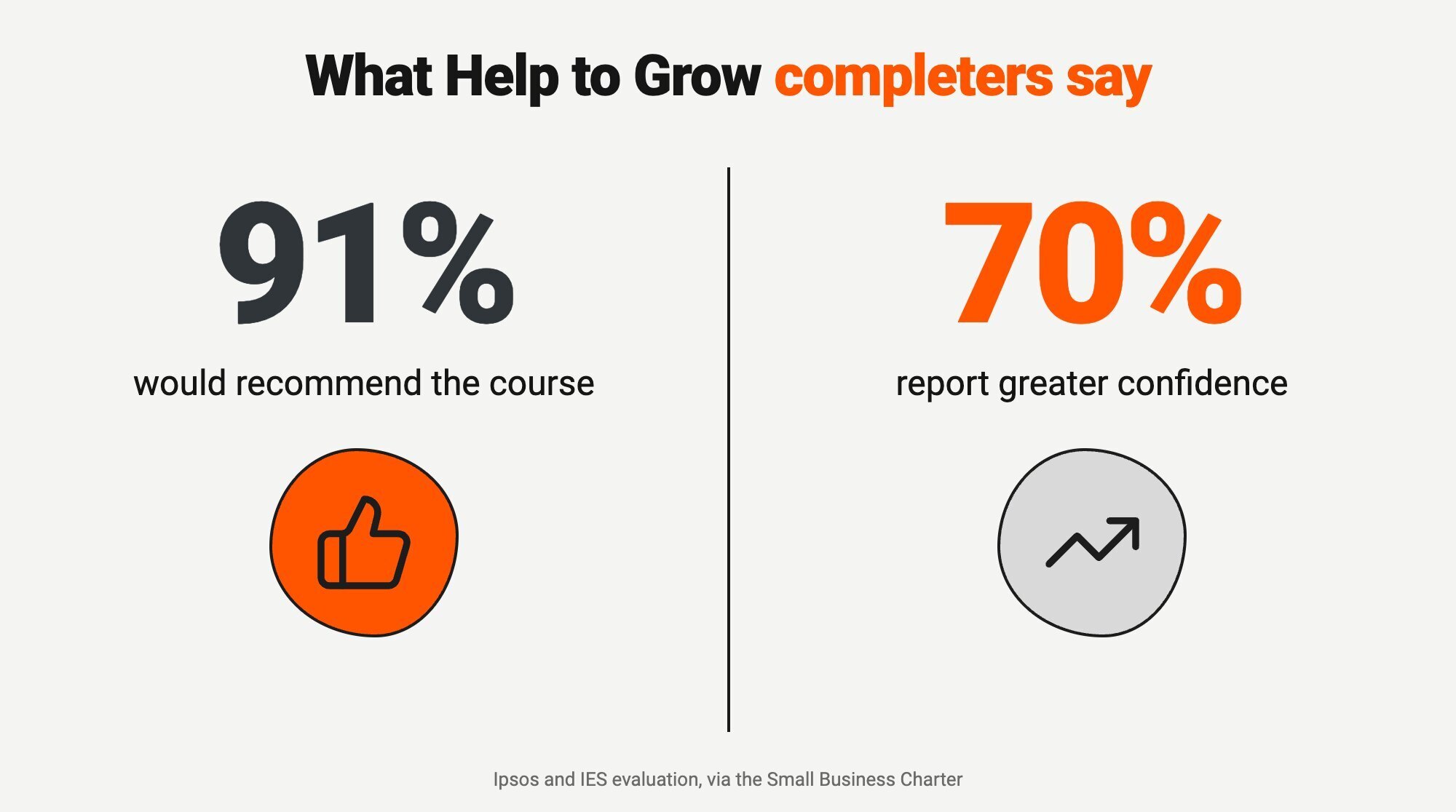
- What people think: 91% of completers recommend it and 70% report greater confidence, according to the Ipsos and IES evaluation reported by the Small Business Charter.
My verdict, up front: for £750, it's one of the best value pieces of management education available to a UK small business owner. Just don't expect a course to do the implementation for you.
Help to Grow Management course cost: what you pay
According to the University of Liverpool's Help to Grow page, the course costs £750, with 90% government funded. That's the figure at the time of writing, so check current pricing with your provider before you apply. Liverpool's page also lists its next cohort as starting on 9 November 2026, so if you're reading this later, check their dates for the following intake.
To put £750 in context, it's less than many owners spend on a single month of software, a trade show stand or a one-to-one coach for a few sessions. If you want to compare it properly, I've broken down how much a business coach costs in the UK in a separate post.
The real cost isn't the fee. It's your time. Twelve weekly sessions plus the thinking and work in between is a serious commitment when you're the person holding the business together. Plan for that before you sign up, not after.
Help to Grow eligibility: who it's for
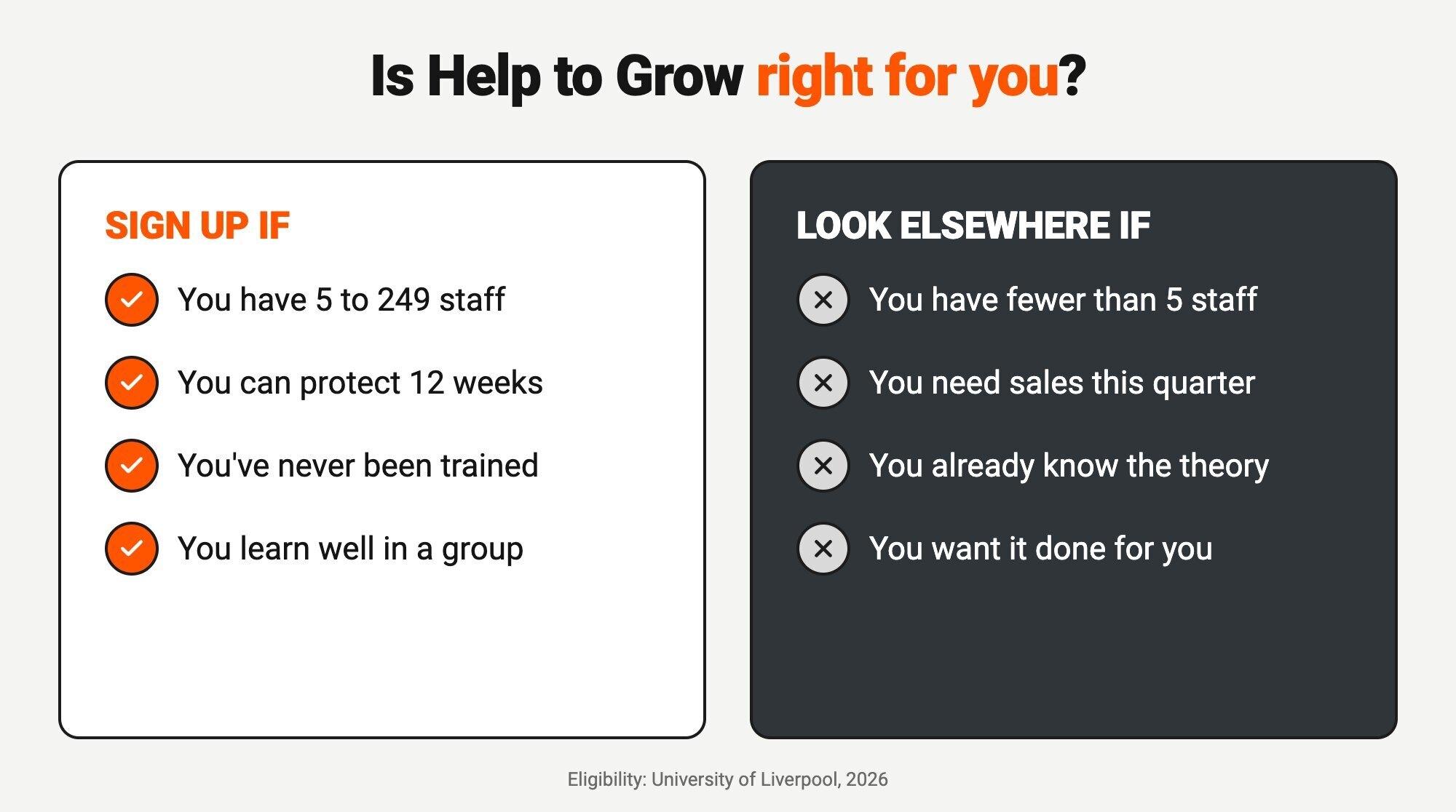
The published criteria say the programme is for businesses with 5 to 249 staff. There may be further conditions, so check the full eligibility details with the business school delivering your cohort.
Beyond the official criteria, here's who I think will get the most from it:
- Owners who've grown on instinct and now want structure and frameworks behind their decisions.
- Founders who've never had formal management training and feel it.
- Leaders who learn well alongside peers in a group, rather than one-to-one.
- Businesses with a small leadership team that could share what's learned.
- People who can genuinely protect the time for 12 weeks.
Know which growth ceiling you're at first
The Growth Engine is our survey of 186 UK business owners. It found 86% have stalled at one of three growth ceilings. Knowing yours helps you pick the right programme, course or coach.
Is Help to Grow Management worth it? The pros
The price is hard to argue with
With 90% government funded, the financial risk is low. Even if you only take two or three solid ideas back to the business, it probably pays for itself.
The satisfaction figures are strong
91% of completers recommending a course is a high bar. 70% reporting greater confidence matters too. Confidence is underrated in founders. A lot of bad decisions come from guessing.
You learn alongside other owners
It runs in cohorts, so you're in a room with other business leaders facing similar problems. For many founders that's worth as much as the content. Running a business is lonely.
One-to-one mentoring is included
The programme includes one-to-one mentoring alongside the group sessions, according to the Small Business Charter. That helps turn general theory into something specific to your business.
It's credible
It's delivered by business schools, not a guru with a hired sports car. You're getting proper management education.
Help to Grow Management: the cons
It's broad, not tailored
A curriculum built for businesses from 5 to 249 staff has to cover a lot of ground. Some sessions will feel spot on. Others won't apply to your stage. That's the trade off of a group programme.
The time commitment is real
Twelve weeks sounds short until you're in week seven, a client is on fire and a session clashes with a pitch. If you can't protect the time, you won't get the value.
Learning isn't the same as implementing
This is my biggest caution, and it applies to every course, including my MBA. Knowing what to do and actually doing it on a wet Tuesday are different things. Most founders I work with don't lack knowledge. They lack a system and the accountability to stick with it.
It ends
Twelve weeks later, you're back on your own. If the business still depends on you for every sale, the course won't have changed that by itself. In The Growth Engine, 77% of UK owners said they still personally win most new business (Business Simplified survey of 186 UK business owners, 2026).
Help to Grow vs a business coach
This is the comparison most owners are really making. Here's how I'd think about it.
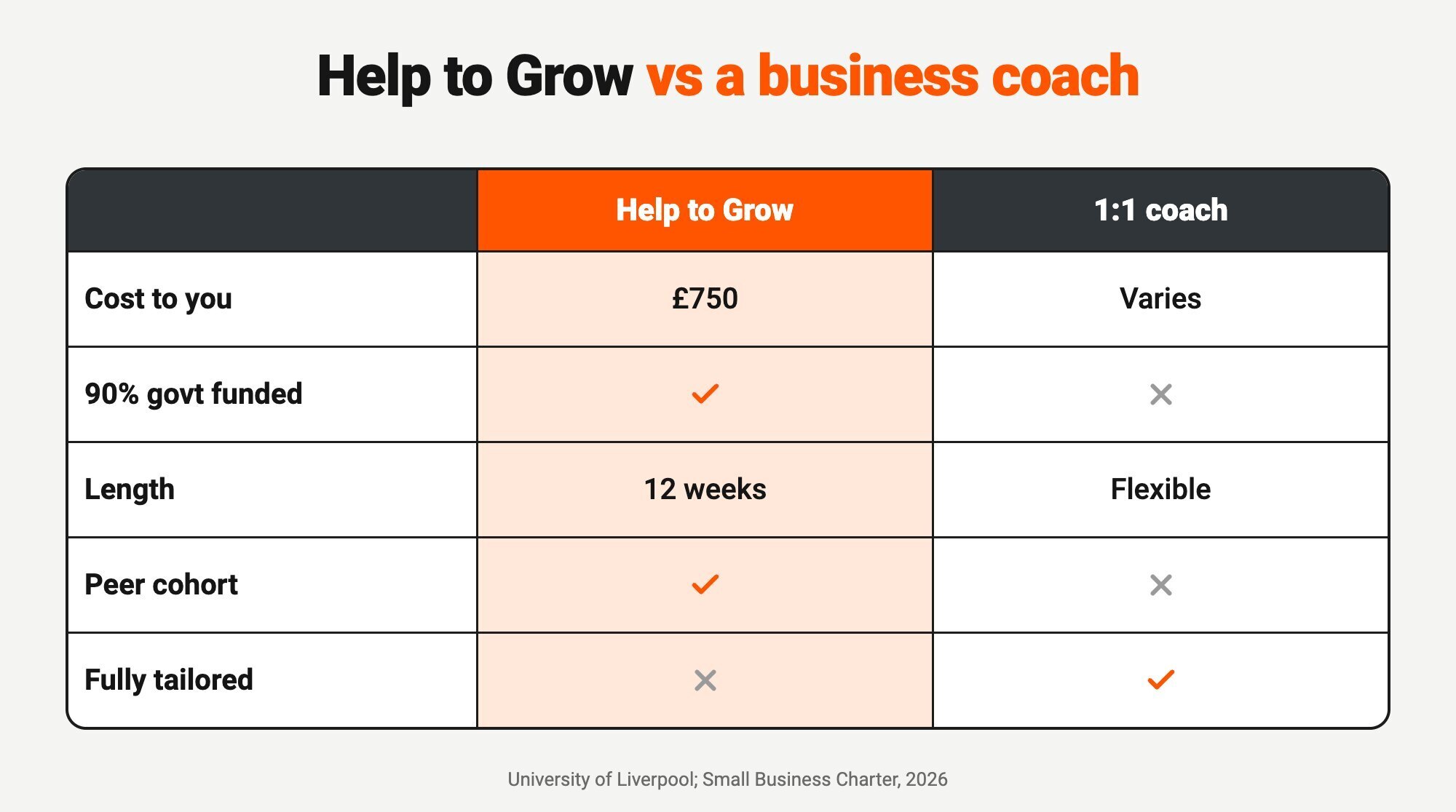
Help to Grow gives you structured management education, a peer group and some mentoring, at a heavily subsidised price, over a fixed 12 weeks. Brilliant for building knowledge and confidence.
A business coach works on your specific business, your specific bottleneck, for as long as you need. More expensive, more tailored, and usually more focused on implementation and accountability. If you're unsure which kind of support you need, read business coach vs consultant vs mentor.
Honestly, they're not mutually exclusive. Plenty of owners would benefit from doing Help to Grow first, then getting support to implement what they've learned.
Full disclosure, this next one's ours: our 90-Day Accelerator at Business Simplified is designed for that implementation stage. It's focused on building the Market, Message and Machine so growth stops depending on you. It's not a replacement for Help to Grow, and if you haven't had any management training, Help to Grow is a sensible place to start. For a wider view, see my guide to the best business growth programmes for UK SMEs.
Who should NOT do Help to Grow Management
- You're below the staff threshold. If you've got fewer than 5 staff, the published criteria rule you out.
- You can't protect the time. Signing up and skipping half the sessions is worse than not starting.
- You need sales this quarter. If your pipeline is empty, fix that first. A management course won't fill it in time. Start with a simple lead generation process.
- You already know the theory. If you've done an MBA or similar, your gap is probably implementation, not knowledge.
- You want someone to do it for you. It's education, not a consultancy.
If you're weighing up coaching instead, my post on when you should NOT hire a business coach applies the same honesty the other way.
My verdict: is Help to Grow Management worth it?
Yes, for the right owner. My Help to Grow Management review verdict, based on the published details and the evaluation figures rather than first hand experience, is that £750 for 12 weeks of business school content, peers and mentoring is excellent value. The 91% recommendation rate backs that up.
The question isn't really whether the course is good. It's whether you'll turn what you learn into a system that runs without you. If you go in with that intention, and protect the time, I think it's one of the smartest £750 a UK founder can spend. If you're looking at more options like this, browse the rest of the Tools Tested category.
Frequently asked questions
What does Help to Grow cost?
The University of Liverpool lists it at £750, with 90% of the cost government funded. Check current pricing with your chosen provider before applying.
Who is eligible for Help to Grow Management?
The published criteria say businesses with 5 to 249 staff. There may be other conditions, so check the full eligibility details with the business school running your cohort.
How much time does Help to Grow take?
The course runs over 12 weekly sessions. Allow extra time between sessions to apply what you learn, and check session lengths with your provider.
Is Help to Grow worth it for a £500k business?
In my opinion, yes, if you have at least 5 staff and can protect the time. At that size, better management habits make a real difference, and £750 is a small risk.
What happens after the Help to Grow course?
You go back to running your business with new frameworks and a peer network. The value depends on what you implement next, which is where many owners look for coaching or an accountability programme.
Download The Growth Engine
Whatever course or programme you choose, it helps to know where you're stuck. The Growth Engine covers the five growth profiles, the three growth ceilings, and how Squaredot went from £800k to £1.2m in three months once the system was built.

Hi, we are Business Simplified
Growth shouldn’t depend on you chasing every lead. Business Simplified uses real data to fix your pipeline, increase leads and improve sales, so you can lead your business instead of being trapped running it.
Get Our Growth Engine White Paper
We surveyed 186 UK businesses to find out what growth strategies actually work
We published those findings in our "Growth Engine" whitepaper. You can get a copy here.