Download my Whitepaper here:
By clicking submit, you agree to receive promotional emails and weekly content from Company.

Why Lead Generation Agencies Fail Small Businesses
Wednesday, November 04, 2026

Most founders who hire a lead gen agency end up with a nice dashboard, a pile of meetings that go nowhere, and a contract they can't wait to get out of. Here's why, and when an agency genuinely can work.
You signed with a lead generation agency because you were sick of being the only person bringing in work. Referrals had slowed. The pipeline was feast or famine. They promised a steady stream of qualified meetings. Three months later, you've had a few calls with people who couldn't remember agreeing to speak to you, and an invoice that arrives bang on time every month.
So are lead generation agencies worth it? For most small UK businesses turning over £100k to £5m, my honest answer is: not yet, and often not in the way they're sold. That's not because every agency is a cowboy. Plenty are decent. It's because of where most small businesses are when they hire one.
In this blog I'll explain why lead generation agencies fail small businesses so often, the red flags to spot before you sign, when outsourcing lead gen can actually work, and what to build first so you're not throwing money at a leaky bucket.
Are lead generation agencies worth it? The honest short answer
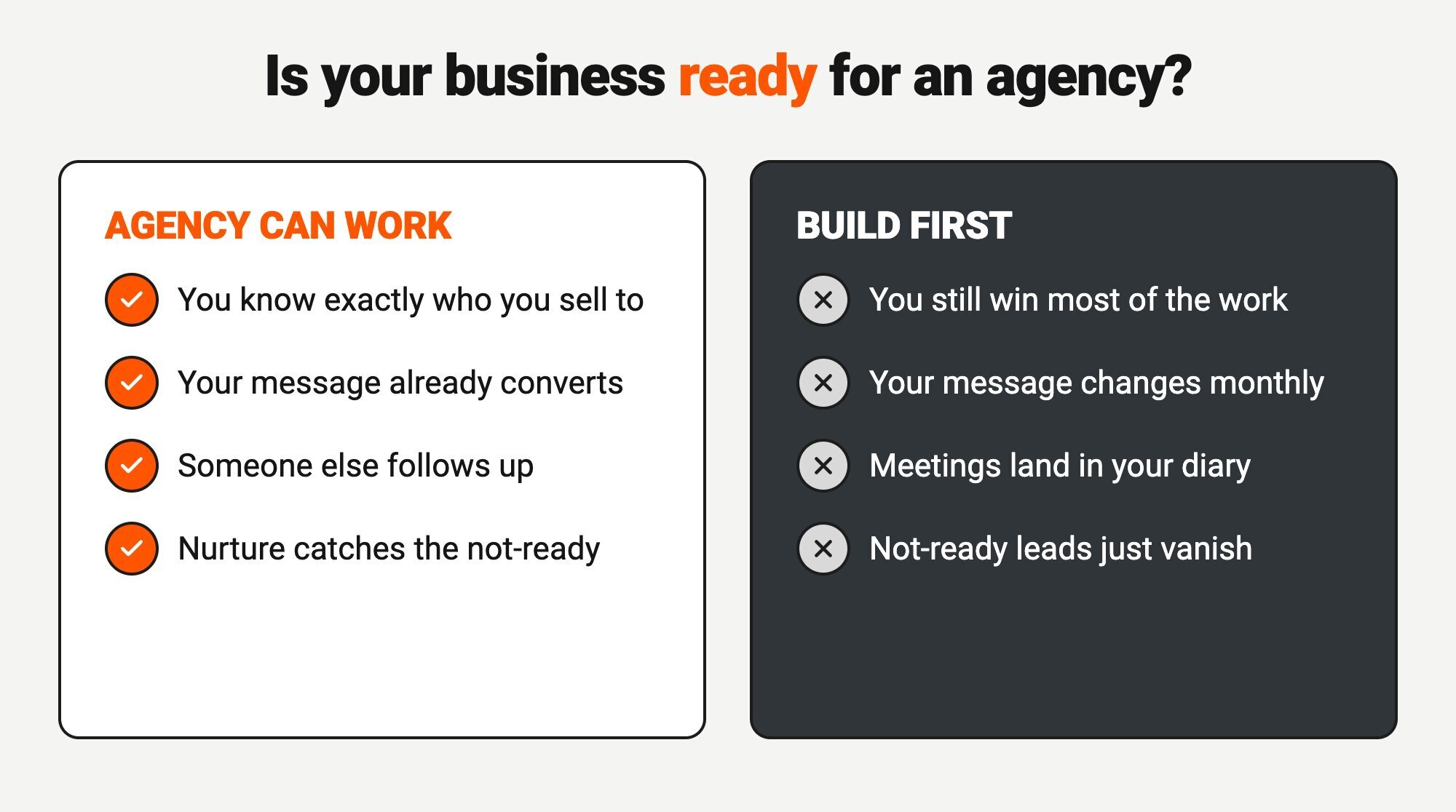
A lead generation agency is worth it when you already know exactly who you sell to, what you say to them, and how a conversation turns into a sale. In that situation, an agency adds volume to something that already works.
If you don't have those three things nailed down, an agency just adds volume to confusion. More meetings with the wrong people, saying the wrong thing, handed to a founder with no time to follow up. That's the most common reason I see a lead generation agency not working.
Our own research backs up how big this gap is. In The Growth Engine, our survey of 186 UK business owners turning over £100k to £5m, 77% said they still personally win most of their new business (Business Simplified survey of 186 UK business owners, 2026). If the founder is the sales process, there's no process for an agency to plug into.
Why lead generation agencies fail small businesses
These are the patterns I see again and again. None of them are about the agency being lazy. Most are about a mismatch between what the agency does and what the business actually needs.
1. You outsourced the problem before you understood it
If you can't write down who your ideal client is, what pain they have and why they should pick you, the agency will guess. They'll guess broad, because broad gets more meetings and meetings are what they report on. That's how you end up on calls with businesses that were never going to buy.
2. The message is theirs, not yours
Agencies run a lot of campaigns. Templates creep in. Your outreach ends up sounding like everyone else's, and your prospects have seen it a hundred times this month. The thing that made your clients refer you in the first place, your expertise and the way you talk about the problem, gets lost.
3. They're measured on activity, you're measured on revenue
Leads booked, emails sent, open rates, connection requests accepted. All easy to report. None of them pay your wages. If the contract rewards activity rather than revenue, don't be surprised when you get lots of activity.
4. Nobody follows up
This one is on us as founders. The agency books a meeting. You're on site, or delivering, or firefighting. The follow-up slips. A warm lead goes cold in a week. Then you blame the lead quality. Sometimes that's fair. Often it's that there was no nurture behind the meeting at all.
5. Short contracts, long sales cycles
If your average deal takes months from first chat to signature, a three-month trial is going to look like a failure even if it's working. You'll cancel just as the early conversations are about to turn into revenue. Be honest about your sales cycle before you judge results.
Fix the engine before you add fuel
The Growth Engine explains the Market, Message and Machine framework, the order most founders should fix things in before paying anyone to generate leads. Based on 186 UK business owners.
Outsourced lead generation pros and cons
To be fair to agencies, there are real upsides. Here's my honest view of both sides.
| Pros | Cons |
|---|---|
| Fast to start, no hiring or training | You don't own the skills or the know-how when you stop |
| Access to tools and data you may not have | Messaging often feels generic |
| Frees founder time on prospecting | Doesn't free founder time on selling or follow-up |
| Can test a new market quickly | Reported metrics can hide poor fit |
| Easy to switch off | Pipeline often stops the day you switch off |
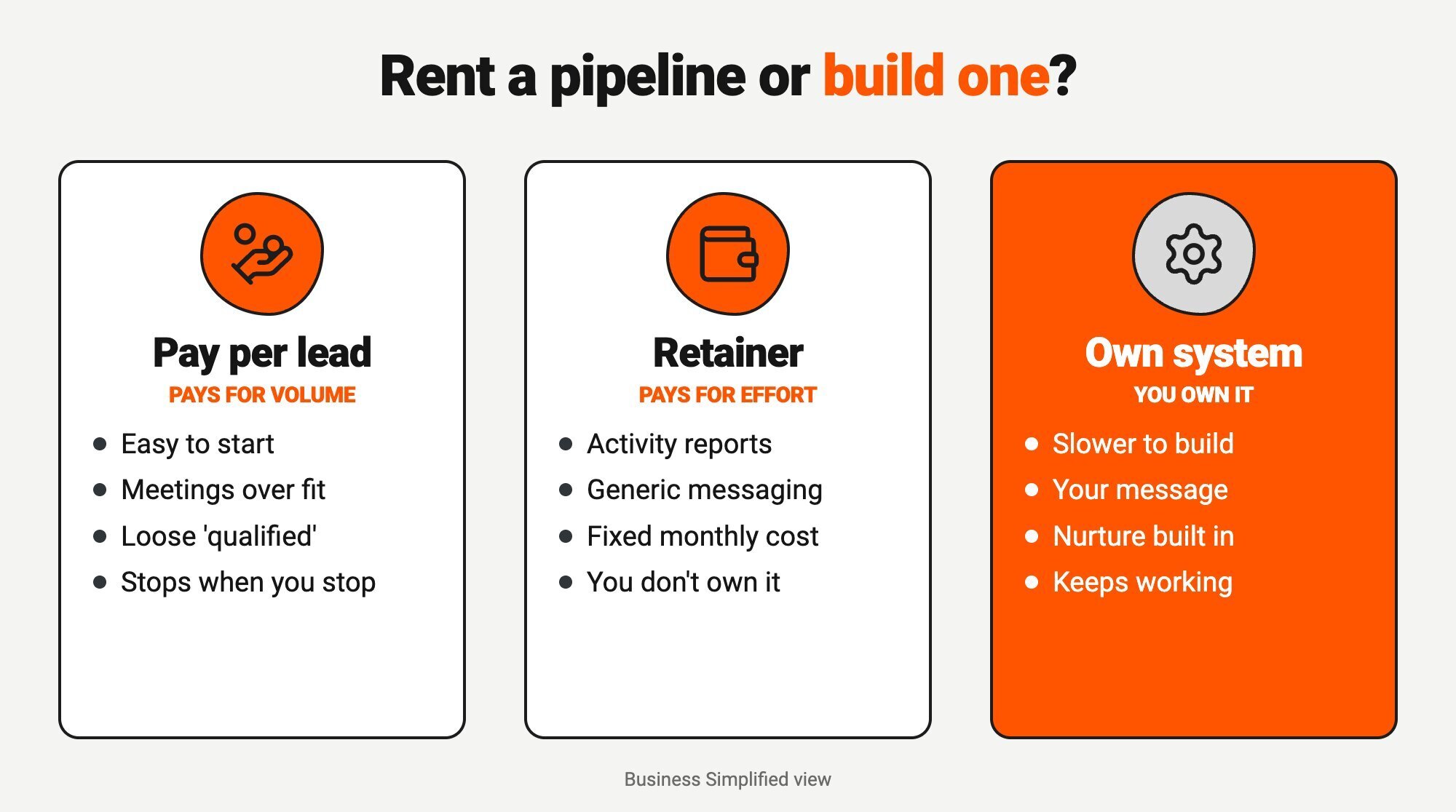
That last row is the one that bites. When you rent a pipeline, it disappears when you stop paying rent. When you build one, it keeps working.
Pay per appointment in the UK: is it better?
Pay per appointment sounds like the safe option. You only pay when someone books a meeting. What could go wrong?
Quite a lot. The incentive is to book as many meetings as possible, which isn't the same as booking meetings with people who will buy. Watch closely how a "qualified" appointment is defined in the contract. Is it someone with budget and a real need, or someone who said "sure, send me a calendar link" to get off the phone?
Retainers have the opposite problem. The agency gets paid either way, so you need strong reporting and a clear agreement on what success looks like. Neither model is automatically better. The definition of success matters far more than the pricing model. I compare the bigger choice in more depth in hire a salesperson or outsource lead generation.
Lead gen agency red flags to check before you sign
If you are going to hire an agency, ask these questions first. Any vague answer is a red flag.
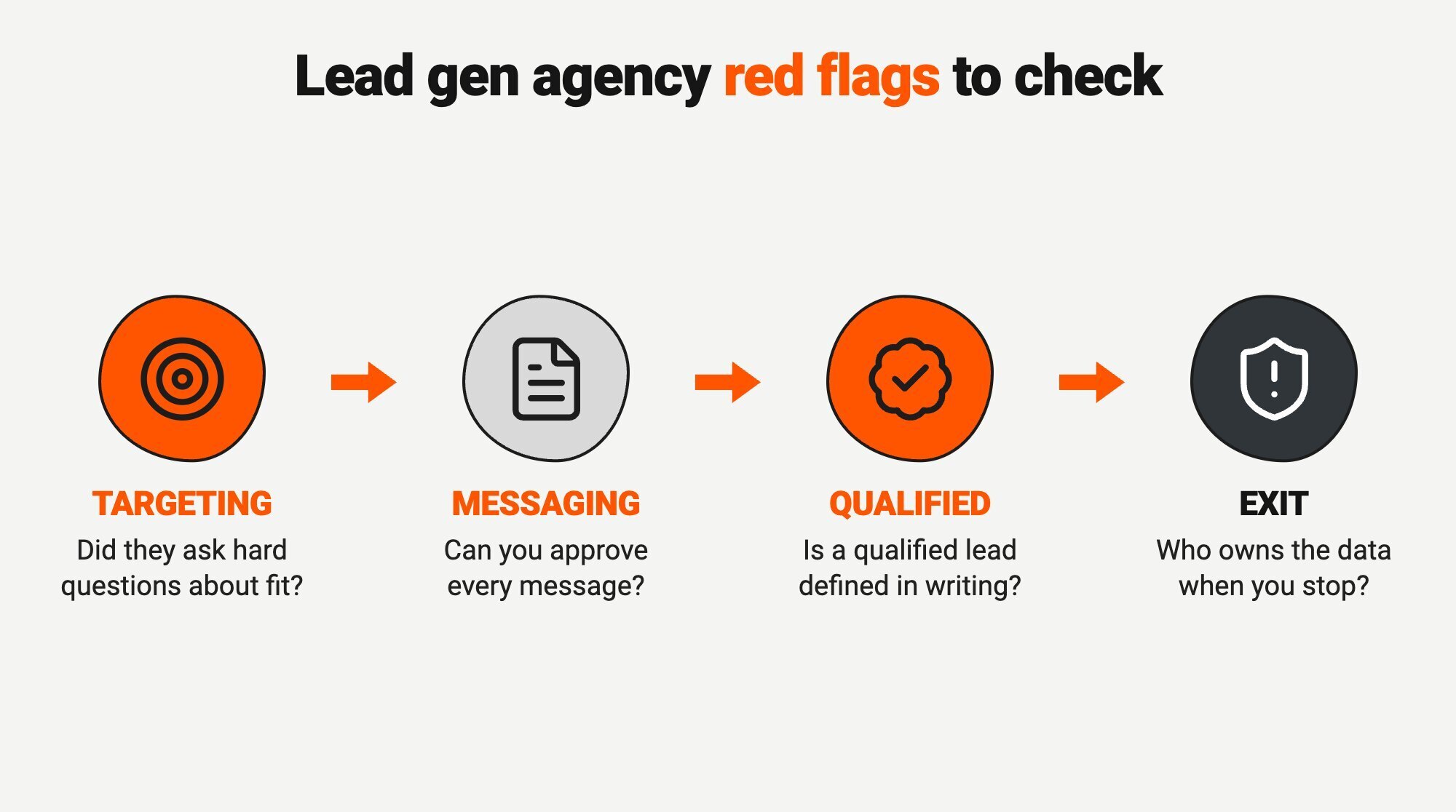
- Who exactly will you target, and how did you decide? If they haven't asked you hard questions about your ideal client, they're guessing.
- Can I see and approve every message before it goes out? It's your brand on the line, not theirs.
- How do you define a qualified lead? Get it in writing.
- What happens to the data, lists and sequences when we stop? If the answer is "they stay with us", you're renting, not building.
- What results have you got for businesses like mine, at my size? Enterprise case studies don't count.
- What's the minimum term, and how do I get out? Long lock-ins with no performance clause are a warning sign.
When a lead generation agency can work
I'm not anti agency. I'm anti agency at the wrong time. An agency can work well when:
- You've already proven a message that turns conversations into sales.
- Someone other than you can take the meetings and follow up properly.
- You have a nurture system, so leads that aren't ready now don't just vanish.
- You treat the agency as extra capacity, not as your entire sales strategy.
If that's you, go for it. If it's not, the money is usually better spent building those foundations.
What to build instead (or first)
The alternative isn't "do nothing". It's to build your own lead generation system in the right order: get clear on your market, sharpen the message, then build the machine that delivers it. I set out the steps in how to create a lead generation process, and how to make it run without you in building a lead generation machine.
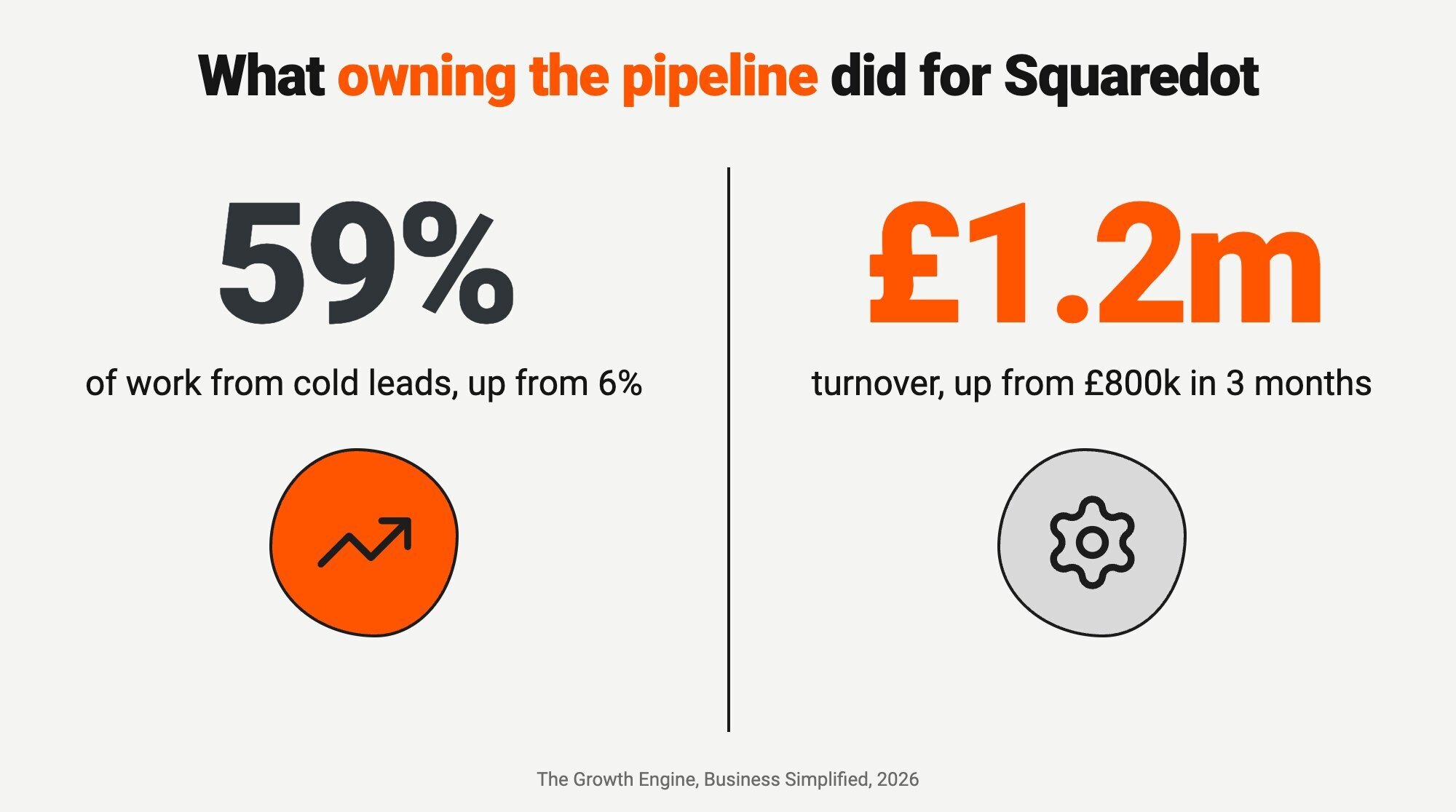
Squaredot, the workplace design business I run, is the example I know best. After building the system, revenue went from £800k to £1.2m in three months, and work coming from cold leads rose from 6% to 59% (The Growth Engine, Business Simplified, 2026). That is the difference between renting a pipeline and owning one.
You'll need some basic tools to do this properly. A CRM is non-negotiable; see my guide to the best CRM for a small UK business. And if you're weighing up whether to bring someone senior in to lead it, read fractional sales director vs full time.
For more uncomfortable truths about growing a business, browse the Honest Truths category.
So, are lead generation agencies worth it for you?
Ask yourself one question: if this agency booked ten great meetings next week, would my business be ready to turn them into revenue? If the honest answer is no, the agency isn't your problem and won't be your solution. Build the system first. Then, if you still want extra capacity, you'll know exactly what to ask for and how to judge it.
Frequently asked questions
Are lead generation companies worth it?
They can be, but only when you already have a clear target market, a proven message and someone to follow up. Without those, most small businesses pay for meetings that don't convert.
Why are my agency leads poor quality?
Usually because the targeting was too broad, the messaging was generic, or a "qualified lead" was defined too loosely in the contract. Slow follow-up on your side can also make good leads look bad.
Should I pay per lead or pay a retainer?
Neither is automatically better. Pay per lead rewards volume, retainers reward showing up. What matters most is a written definition of a qualified lead and clear reporting against revenue, not activity.
How long should lead generation take to work?
It depends on your sales cycle. If deals normally take months to close, judge a campaign over a similar period, not after a few weeks. Track early signs like quality of conversations in the meantime.
What should I ask an agency before signing?
Ask who they'll target and why, whether you approve messaging, how they define a qualified lead, who owns the data when you stop, what results they've had with businesses your size, and how you exit the contract.
Download The Growth Engine
Before you decide whether lead generation agencies are worth it for your business, read how 186 UK owners grow (and get stuck). It includes the Squaredot case study and the Market, Message and Machine framework.

Hi, we are Business Simplified
Growth shouldn’t depend on you chasing every lead. Business Simplified uses real data to fix your pipeline, increase leads and improve sales, so you can lead your business instead of being trapped running it.
Get Our Growth Engine White Paper
We surveyed 186 UK businesses to find out what growth strategies actually work
We published those findings in our "Growth Engine" whitepaper. You can get a copy here.