Download my Whitepaper here:
By clicking submit, you agree to receive promotional emails and weekly content from Company.

Fractional Sales Director vs Full Time: The Honest Maths
Wednesday, November 04, 2026

You need someone senior to sort out sales, but a full time sales director costs serious money. Is a fractional one the smart move or a false economy? Let's do the maths properly.
You're still the best salesperson in the business. Maybe you've hired a couple of reps and they're busy but not really selling. Maybe the pipeline lives in your head. Either way, you know sales needs a grown up in charge, and it can't keep being you.
The obvious answer is a sales director. Then you look at the salary and wince. So someone mentions a fractional sales director, and it sounds perfect: senior expertise, part of the week, a fraction of the price.
In this blog I'll compare a fractional sales director in the UK with a full time hire, honestly. I'll show you the real numbers from published UK sources, run the maths on what each one actually costs you over a year, explain what fractional people can and can't do, and give you a clear verdict on which to choose. No sales pitch. I don't offer fractional sales directors, so I've got no horse in this race.
What is a fractional sales director?
A fractional sales director is an experienced sales leader who works for you part time, usually a set number of days a week or month, on an ongoing basis. They're often working with several businesses at once. You get someone who's built and run sales teams before, without paying for five days a week.
The job is usually to build the sales function rather than to be it. That means things like:
- Writing down the sales process so it doesn't live in your head.
- Setting up the pipeline, targets and reporting (normally in your CRM).
- Coaching and managing your existing salespeople.
- Helping you hire the right people, and spotting the wrong ones early.
- Getting you out of the weekly sales meeting.
What they usually don't do is sit on the phones all day. If you want someone to personally bring in new deals, that's a different job and you should be clear about it from day one.
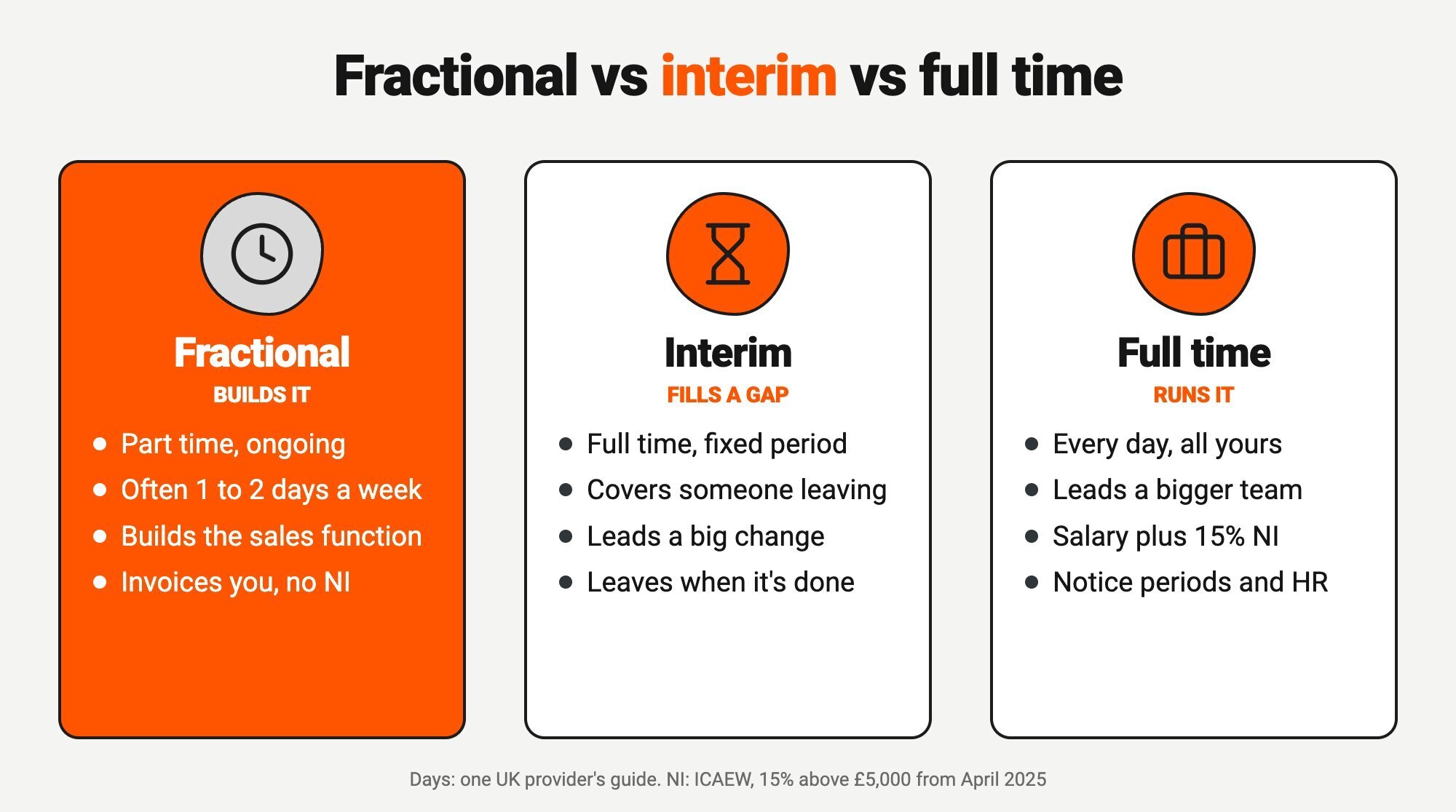
Fractional vs interim sales director
People mix these up. An interim sales director is typically full time for a fixed period, often to cover a gap: someone's left, there's a restructure, or a big change needs leading. A fractional sales director is part time and ongoing. Interim fills a hole. Fractional builds something over time.
Fractional sales director cost in the UK
There's no official benchmark, so treat any figure as a guide. One UK provider's guide puts a fractional sales director at £1,500 to £5,000 a month for one to two days a week. Another UK firm, Klozers, offers semi-retired sales directors from about £2,000 a month.
Over a year, the £1,500 to £5,000 range works out at £18,000 to £60,000. No employer National Insurance, no pension, no holiday pay, and usually no long notice period.
Full time sales director cost: the honest maths
That same UK guide puts a full time sales director at £72,000 to £100,000 in salary, and often £130,000 or more in total cost once you add everything up.
Let's check the bit we can calculate. Employer National Insurance is 15% on earnings above £5,000 a year since April 2025. So:
- On £72,000: (£72,000 minus £5,000) x 15% = £10,050 in employer NI, so £82,050 before anything else.
- On £100,000: (£100,000 minus £5,000) x 15% = £14,250, so £114,250 before anything else.
Add pension, bonus or commission, a car allowance, kit, recruitment and the cost of a few months getting up to speed, and it's easy to see how you hit £130,000 or more. And that's if you hire the right person first time.
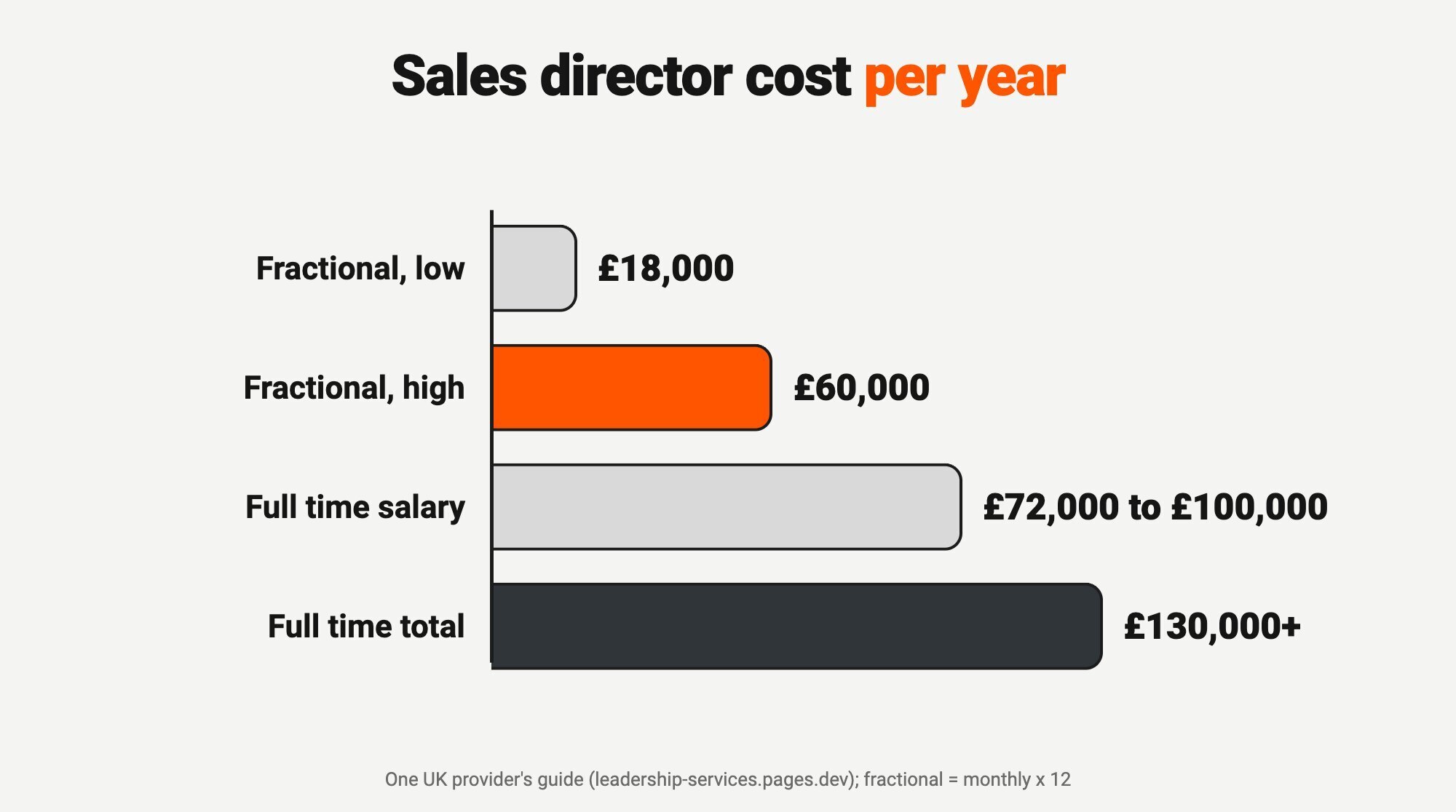
So on paper, a fractional sales director costs roughly a seventh to just under half of that £130,000 full time total. That's a big gap. But cost per year isn't the right question. Cost per result is.
Is sales really the problem?
The Growth Engine surveyed 186 UK business owners and found 77% still personally win most new business. It shows whether you need a sales leader or a better system first.
Fractional vs full time sales director: side by side
| Fractional sales director | Full time sales director | |
|---|---|---|
| Cost (one UK guide) | £1,500 to £5,000 a month (£18,000 to £60,000 a year) | £72,000 to £100,000 salary; often £130,000+ total |
| Time with you | Typically 1 to 2 days a week | Every day |
| Employer NI and benefits | No (they invoice you) | Yes: 15% NI above £5,000, plus pension and benefits |
| Best at | Building process, coaching a small team | Running a larger team day to day |
| Availability | Shared with other clients | Fully yours |
| Commitment | Usually flexible | Notice periods, HR, possibly redundancy |
| Risk if it goes wrong | Lower; easier to end | Higher; a bad senior hire costs months |
Where a fractional sales director works best
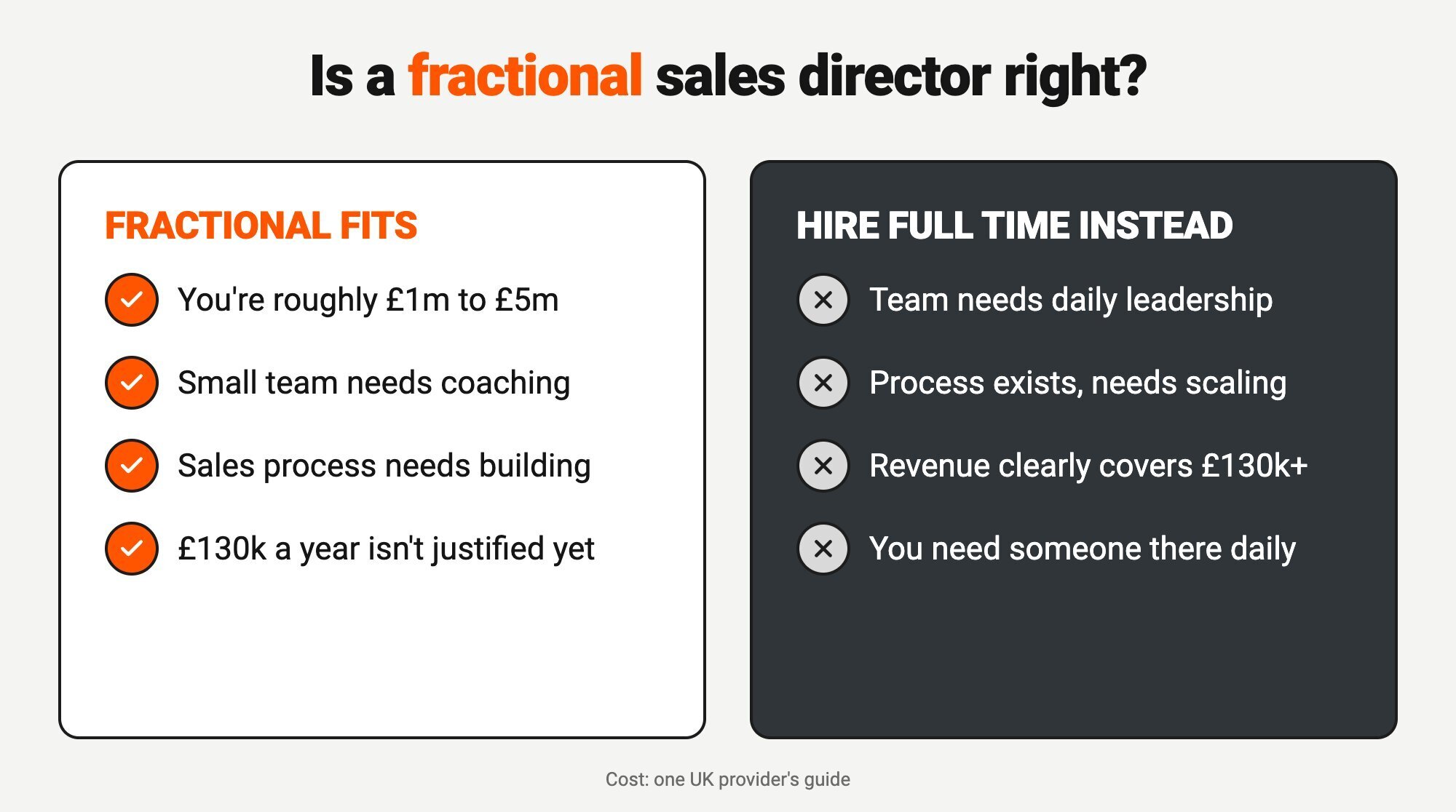
In my view, fractional works brilliantly when the business has outgrown the founder doing sales but isn't big enough to keep a full time director busy. That's a lot of firms in the £1m to £5m bracket.
- You have a small team that needs leading. A couple of salespeople who need coaching and structure, not a full time boss.
- You need the process built. Pipeline stages, a proper CRM setup, a weekly rhythm. Building is a project; running it can be lighter.
- You want to test before committing. Find out what good sales leadership looks like in your business before you pay six figures for it.
Where it falls down: if your team needs daily hands on management, one or two days a week won't be enough. The fractional director turns up on Tuesday, sets the direction, and by Thursday everyone's drifted back to old habits. Also, they're shared. When a bigger client has a crisis, guess whose day gets moved.
When you should go full time
A full time sales director makes sense when the sales team is big enough that leading it is a full time job, when you need someone in the room every day, and when the extra revenue they'll drive clearly covers that £130,000 or so. A common path is fractional first to build the machine, then a full time hire to run and scale it once it's working. The fractional person can even help you recruit their replacement.
Whatever you do, don't make the mistake I did. I grew SPOR to around £5m in about three years and then got stuck trying to reach £7.5m. I hired a sales team, which turned me into a manager instead of a seller, and we went round in circles for two years. The answer wasn't more people. It was a system that didn't depend on me. If you're weighing up more junior hires instead, read hire a salesperson or outsource lead generation? and the real cost of hiring a salesperson in the UK.
Five questions to ask a fractional sales director before you sign
If you go fractional, the quality of the person is everything. Titles are cheap. Before you sign anything, ask:
- What have you built before, and at what size? You want someone who's taken a business like yours from founder led sales to a working team, not just someone who managed a big team somebody else built.
- How many clients do you have right now? Too many and you'll get their leftovers.
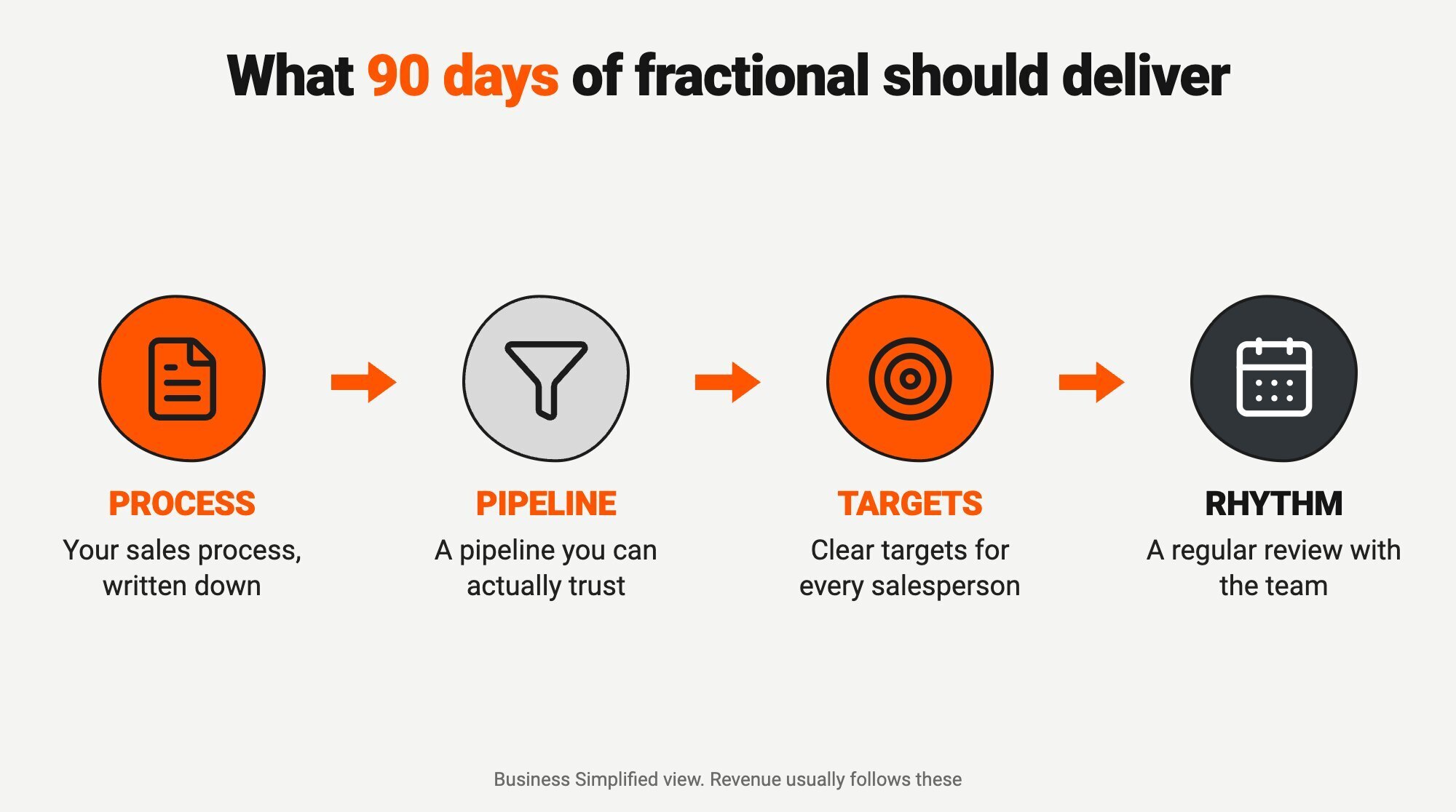
- What will be different in 90 days? A good answer is specific: a written process, a clean pipeline, a weekly rhythm. A vague answer is a warning.
- Who does the selling? Be clear whether they'll be in front of clients or building the system for others to run.
- How do we end it? Notice period, handover and who owns the documents they create.
The verdict: fractional sales director UK vs full time
Choose a fractional sales director if you're roughly £1m to £5m, you have a small sales team (or are about to hire one), you need the sales process built and written down, and you can't justify £130,000 a year yet. Be clear in writing about days, outcomes and what they will and won't do.
Choose a full time sales director if your team is big enough to need daily leadership, your process already exists and needs running at scale, and the numbers clearly pay for a six figure hire.
Choose neither yet if you haven't worked out who your ideal client is or what you're really selling. No sales director, fractional or otherwise, can fix a fuzzy message. Start with how UK SMEs grow from £100k to £5m and the lead generation process first. You'll also need somewhere for that process to live, so have a look at the best CRM for a small UK business. For more comparisons like this, browse our Head to Head posts.
If you do go fractional, this is what I would hold them to in the first 90 days.
Frequently asked questions
What does a fractional sales director cost?
One UK provider's guide puts it at £1,500 to £5,000 a month for one to two days a week, which is £18,000 to £60,000 a year. Klozers offers semi-retired sales directors from about £2,000 a month. Always get several quotes.
How many days a week?
Typically one to two days a week. Building a process can need more time early on, then less once it's running. Agree the days and the outcomes up front.
When should you go full time?
When the team is big enough that leading it is a full time job, you need someone there every day, and the revenue they'll drive clearly covers a total cost that one UK guide puts at £130,000 or more.
What is the difference between fractional and interim?
Interim is usually full time for a fixed period to cover a gap or lead a change. Fractional is part time and ongoing, typically building and improving the sales function over months.
What results should I expect in 90 days?
I wouldn't expect a revenue miracle. In 90 days a good fractional sales director should have your sales process written down, a pipeline you trust, clear targets and a regular review rhythm with the team. Revenue impact usually follows that.
Download The Growth Engine
Before you bring in a fractional sales director in the UK or hire full time, find out which growth ceiling you're stuck at. The Growth Engine shares what 186 UK business owners told us, plus the Market, Message and Machine framework and the Squaredot case study.

Hi, we are Business Simplified
Growth shouldn’t depend on you chasing every lead. Business Simplified uses real data to fix your pipeline, increase leads and improve sales, so you can lead your business instead of being trapped running it.
Get Our Growth Engine White Paper
We surveyed 186 UK businesses to find out what growth strategies actually work
We published those findings in our "Growth Engine" whitepaper. You can get a copy here.