Download my Whitepaper here:
By clicking submit, you agree to receive promotional emails and weekly content from Company.

Why Your Website Is Not Generating Leads (It's Not Traffic)
Monday, November 16, 2026

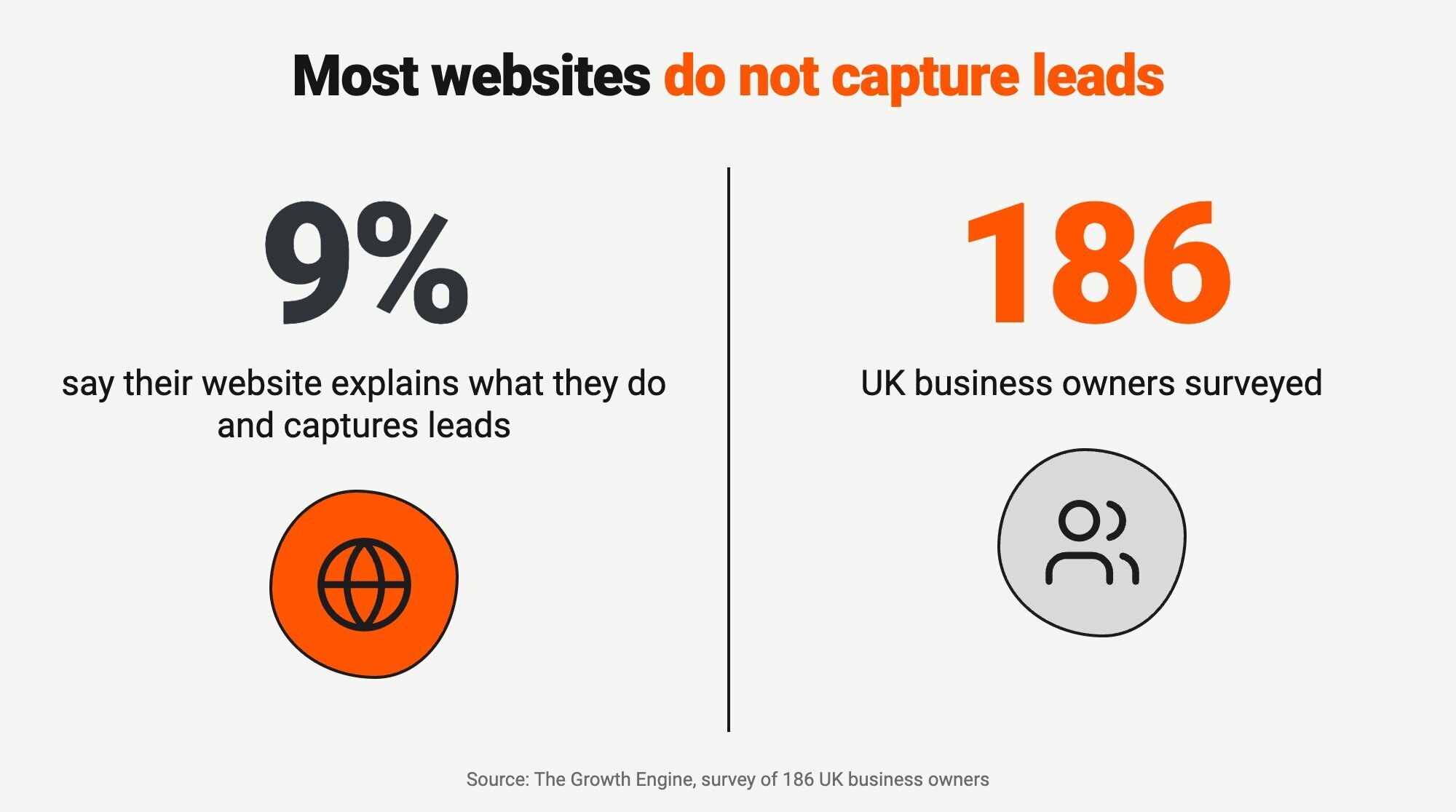
Only 9% of the business owners we surveyed say their website tells people exactly what they do and captures leads. If your website is not generating leads, the problem is rarely traffic. It's what happens when people land.
You've done the hard bit. You've posted on LinkedIn, you've shown up on social, you've sent people to your site. And then nothing. No enquiries, no downloads, no new names in your inbox. Just a contact page gathering dust.
In this blog I'll walk you through why a website not generating leads is almost never a traffic problem, what your site is really for, and the three things to change this week so it starts capturing the people who are already visiting. It's the written version of a video I recorded on a very muddy walk in the woods after a storm, so watch that first if you'd rather listen.
Why your website is not generating leads
Loads of people think it works like this. Start a business. Build a website. Add a contact us page. List the services. Sit back and wait for everyone to be happy.
Wrong. It doesn't work like that. About as well as me going for a walk in the woods straight after a storm, which is what I was doing when I filmed this.
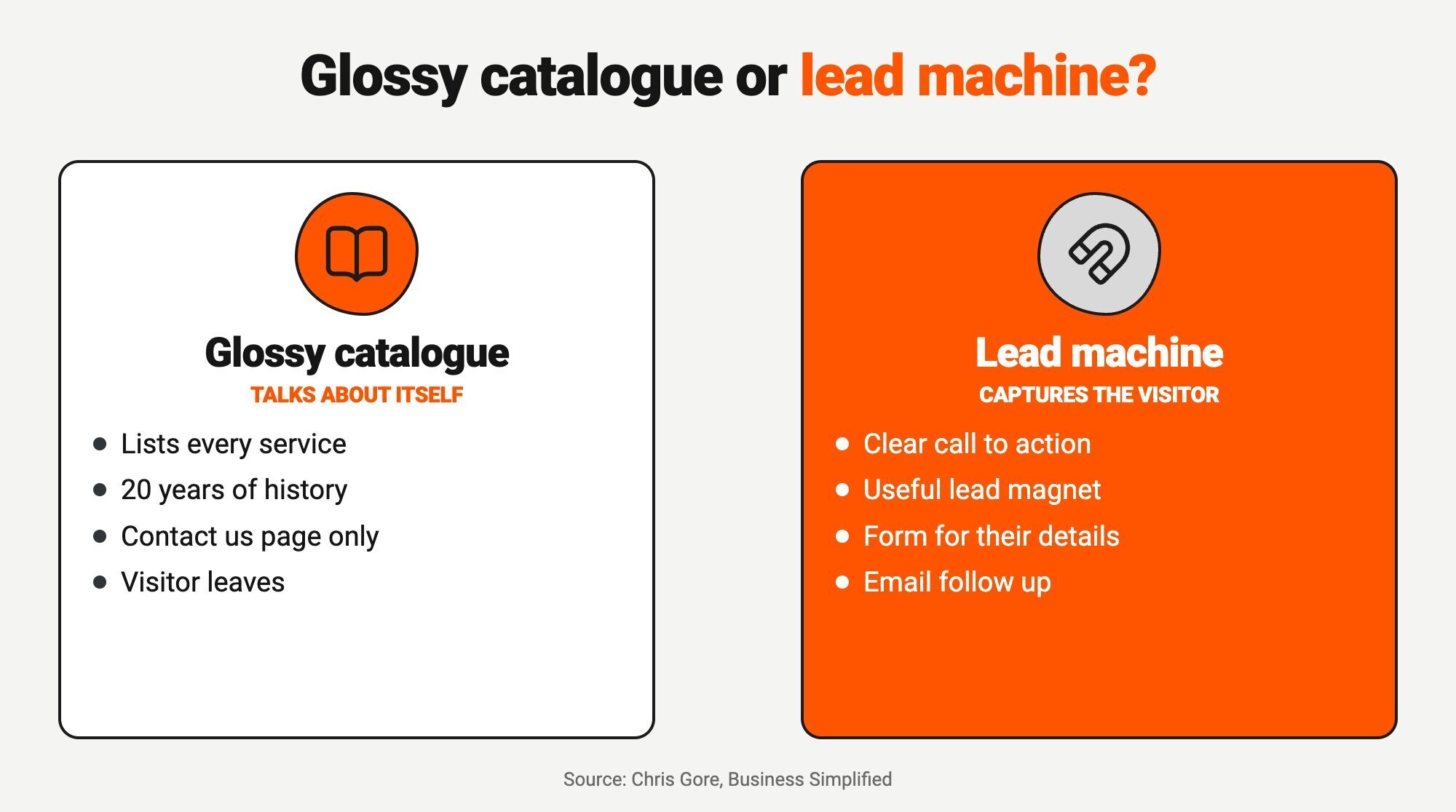
Here's what really happens. People land on your site and they research. They do far more of that now, especially with AI tools doing half the digging for them. And what do most small business websites give them? A glossy catalogue. Here are our services. Here's how to contact us. Here's our history.
That last one is the classic. "We've been in business for 20 years. This is what we do. This is how we do it."
You're talking about yourself. And when you only talk about yourself, you lose the prospect. They don't stick around.
It's not a traffic problem
When a website is not generating leads, the first instinct is to go and get more visitors. More posts. More ads. More SEO.
But think about what you've already done. You've written the social posts. You've put everything on LinkedIn. You're driving people to your website. That's the expensive, time hungry part, and you've done it.
Do not lose your prospect at that point.
If they arrive and find ten tabs, six options and no obvious next step, they leave. More traffic just means more people leaving. You don't have a visitor problem. You have a capture problem.
If you want the full diagnostic, I've written up the seven honest reasons a website gets traffic but no leads. This post is about the one fix that matters most.
Your website is a lead generation machine, not a glossy catalogue
This is the very first thing to get straight. Your website is a lead generation machine. It is not a brochure.
You can still have the catalogue stuff on there. Services, about us, the history, all of it. Nobody is saying delete it. But the actual goal of the site is to capture the details of the people who visit.
So you always need a mechanism to capture those details. Always.
Want to see what I mean? I own two businesses, SPOR and Squaredot. Go to wearespor.com and squaredot.co.uk and just look at how each one tries to capture your details. That's the thing to copy, not the design.
Then go and look at a big online brand. I mention a mattress company in the video, and they're a good example of the type. Watch how hard they work to get your details before you leave. They are not relying on you finding the contact page.
See how 186 UK business owners win customers
The Growth Engine is our research into how UK businesses doing £100k to £5m grew, including how they turn visitors into leads.
Fix one: put a lead magnet in your hero section
The hero section is the top of your home page. The first thing people see before they scroll. That's where your call to action goes, your CTA.
Not buried on page four. Not in the footer. At the top.
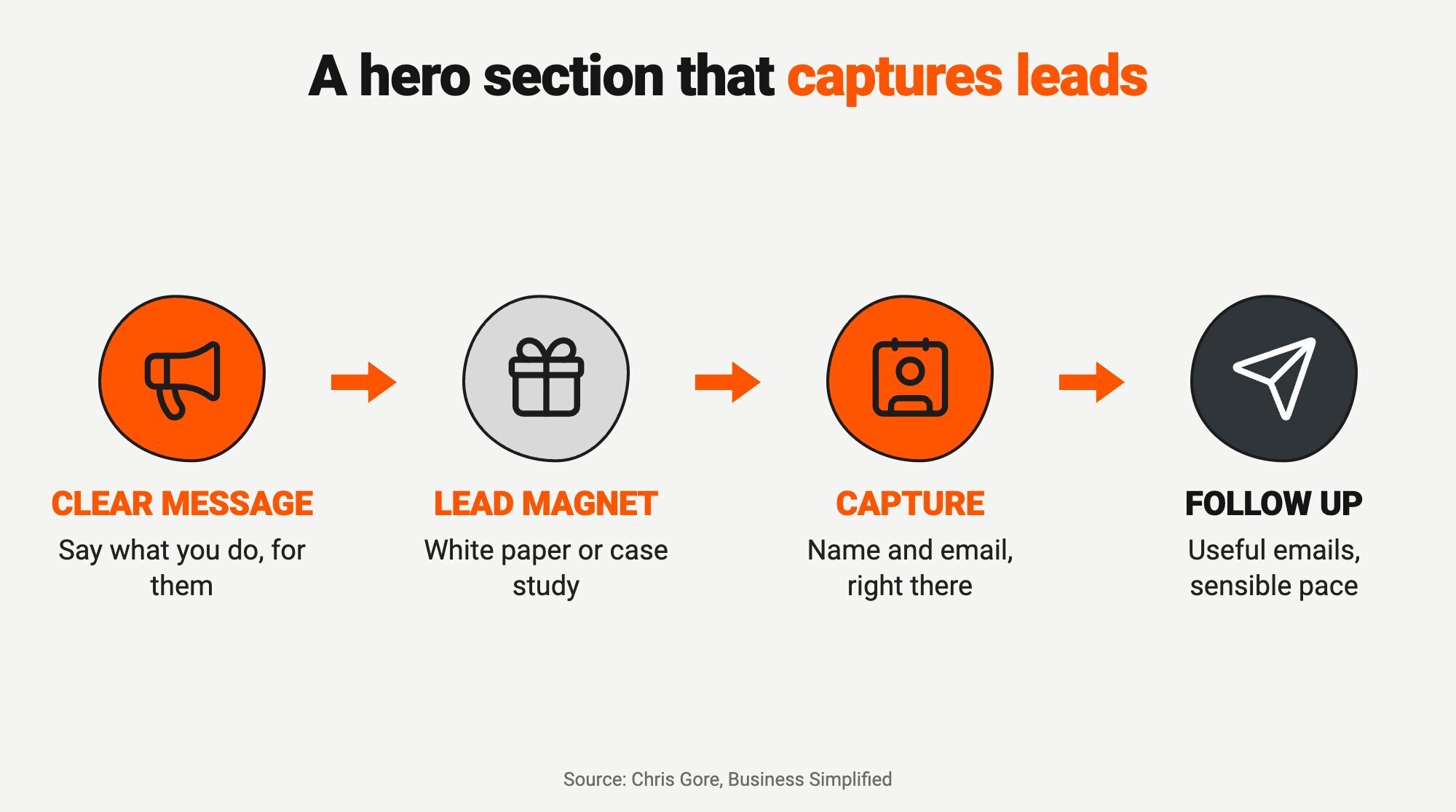
And the call to action needs to be something your prospect can do right now that's useful to them. That's your lead magnet. Something you provide to your prospects in exchange for their details. Is it a white paper? Is it a case study download? Something along those lines.
"Contact us" is not a lead magnet. It only works for the tiny number of people who are ready to buy today. Everyone else is still researching, and you've given them nothing to do.
If you're stuck on what to offer, here are the best lead magnet ideas for UK service businesses, ranked.
Fix two: capture their details
A lead magnet with no way to collect a name and an email is just a free PDF. So next to that call to action you need the capability to capture details. A simple form. Name, email, done.
This is the bit most sites skip. They'll happily tell you everything about the company and never once ask who you are.
Once you've captured those details, you've got something you didn't have before. On the back end you now have the ability to email those people. A visitor who would have vanished is now someone you can talk to again.
Fix three: follow up without taking the mickey
Now you've got their email, use it. Carefully.
Don't take liberties. Don't email them every single day. That's the quickest way to get unsubscribed.
The job of the follow up is to build confidence and familiarity. Your prospects get to know who you are, your tone of voice and how you work. That's the key to it. So when they are ready to buy, you're the name they already know.
That's a nurturing sequence. A handful of useful emails, sent at a sensible pace. If you need a tool for it, I've reviewed Mailchimp for UK small businesses, and I've written about how to build a lead generation machine that runs without you, which covers the whole chain from audience to email.
How do I know this works?
Two reasons.
First, my own businesses have relied on exactly this sort of engagement. When we built the system at Squaredot, it went from £800k to £1.2m in three months, and the share of work coming from cold leads rose from 6% to 59%.
Second, we studied 186 UK business owners and asked how they grew. These are businesses doing between £100,000 and £5m in revenue, including the ones that broke through the £1m barrier. This is how they did it. In the same research, 77% of owners told us they still personally win most of their new business, which is exactly what a website that captures and nurtures leads starts to fix.
We published the findings in our white paper, The Growth Engine. Do you like what I did there? Clever, isn't it. A lead magnet, in a blog about lead magnets.
The honest bit: who this won't fix
I'm not going to pretend a form at the top of your home page solves everything.
- If nobody visits your site at all, start there. Capture only works when there's someone to capture.
- If your lead magnet is dull or has nothing to do with what you sell, people won't swap their email for it.
- If you capture details and then never email anyone, you've built half a machine.
- If you can't yet say clearly who you sell to, fix that first. I cover it in how to create a lead generation process.
There's plenty more of this sort of straight talk in the Honest Truths section of the blog.
So, is your website not generating leads? Do this today
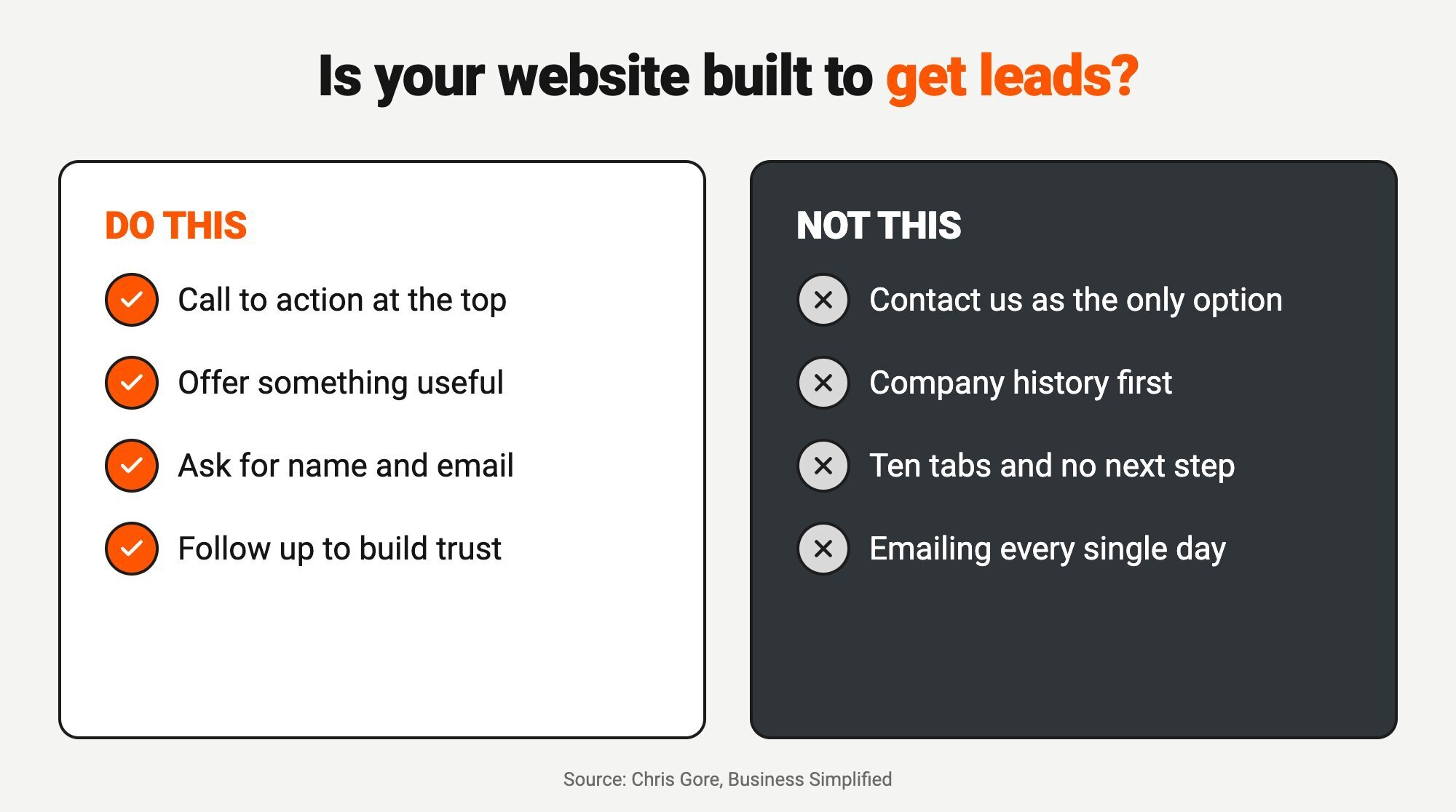
Open your own home page and look at the top of it like a stranger would.
- Is there a really clear call to action in the hero section?
- Is it something useful to the visitor, like a white paper or a case study, and not just "contact us"?
- Can they leave their details right there?
- Does anything happen after they do?
Hero section. Really clear call to action. Capture their details. Follow up with a nurturing sequence. That's it.
And if you want a second pair of eyes, stick your website in the comments on the video. I'm more than happy to have a look and tell you what I'd change.
Frequently asked questions
Why is my website not generating leads?
Usually because it's built as a catalogue of services and company history, with a contact page as the only next step. Visitors who are still researching have nothing to do, so they leave. The fix is a clear call to action and a way to capture their details.
Do I need more traffic to get more leads?
Not first. If the visitors you already have aren't leaving their details, more traffic just means more people leaving. Sort the capture, then go and get more visitors.
What should go in the hero section of my website?
A clear statement of what you do, a call to action for something useful such as a white paper or case study download, and a simple way for the visitor to give you their details.
What is a lead magnet?
Something useful you give to prospects in exchange for their contact details. White papers, case studies, checklists and scorecards are common examples.
How often should I email new leads?
Often enough that they get familiar with you, not so often that you annoy them. Every day is too much. The aim is to build confidence and familiarity over time.
Download The Growth Engine
We asked 186 UK business owners how they grew. The Growth Engine sets out what the ones who broke through £1m did, including how they capture and follow up leads.

Hi, we are Business Simplified
Growth shouldn’t depend on you chasing every lead. Business Simplified uses real data to fix your pipeline, increase leads and improve sales, so you can lead your business instead of being trapped running it.
Get Our Growth Engine White Paper
We surveyed 186 UK businesses to find out what growth strategies actually work
We published those findings in our "Growth Engine" whitepaper. You can get a copy here.