Download my Whitepaper here:
By clicking submit, you agree to receive promotional emails and weekly content from Company.
Mailchimp Review: Is It Worth It for UK Small Businesses?
Monday, November 09, 2026
Mailchimp is the email tool everyone has heard of. That doesn't make it the right one for a UK business that wants emails to turn into sales. Here's the honest review.
You've got a list. Maybe 400 past clients, enquiries and people who downloaded something once. You know you should be emailing them. Someone says "just use Mailchimp", you sign up, and three weeks later you've sent one newsletter, it went to Promotions, and you're not sure anyone read it.
That's not really Mailchimp's fault. But it's worth knowing what you're buying before you pay for it, because the free plan isn't what it used to be and the prices climb fast as your list grows.
In this Mailchimp review for small businesses I'll cover what it costs in 2026, what's good, what's frustrating, who it suits, who should skip it, and how it compares with the tools I use. I've used Mailchimp and AWeber, and Business Simplified now sends its email from ClickFunnels, so I've got no reason to sell you any of them.
What is Mailchimp?
Mailchimp is an email marketing platform, owned by Intuit. You store contacts, build emails with a drag and drop editor, send campaigns, and set up automated sequences (Mailchimp calls them flows). It also does landing pages, signup forms, basic reporting and SMS in some countries.
It's built for small businesses and it's easy to get started. That's its biggest strength and, as you'll see, part of its biggest weakness.
How much does Mailchimp cost in the UK?
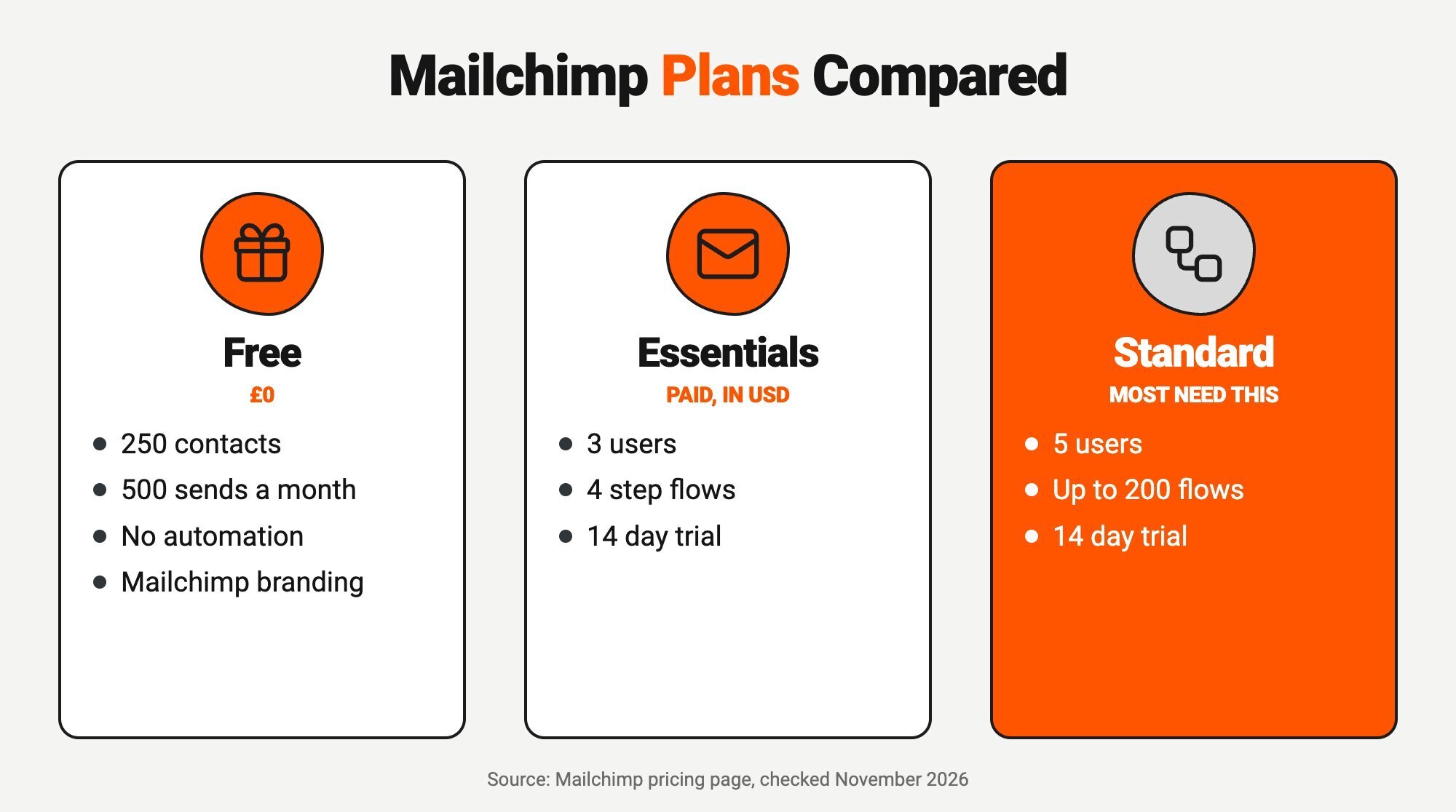
Mailchimp prices in US dollars, and the price depends on how many contacts you have. Here's what Mailchimp's pricing page showed when I checked in November 2026:
- Free: up to 250 contacts and 500 sends a month, one user, no automation, and Mailchimp branding on your emails.
- Essentials: three users and simple automated flows of up to four steps.
- Standard: five users and up to 200 automated flows. This is the plan most businesses actually need.
- Premium: unlimited users, phone support and multivariate testing, priced for much bigger lists.
For a sense of UK cost, a Wise guide from August 2025 listed Essentials at about £9.71 a month and Standard at about £14.93 a month for 500 contacts, billed monthly. Prices change and promotions come and go, so check the live page. The important bit: the price rises with every contact you add, including people who never open anything.
What's good about Mailchimp
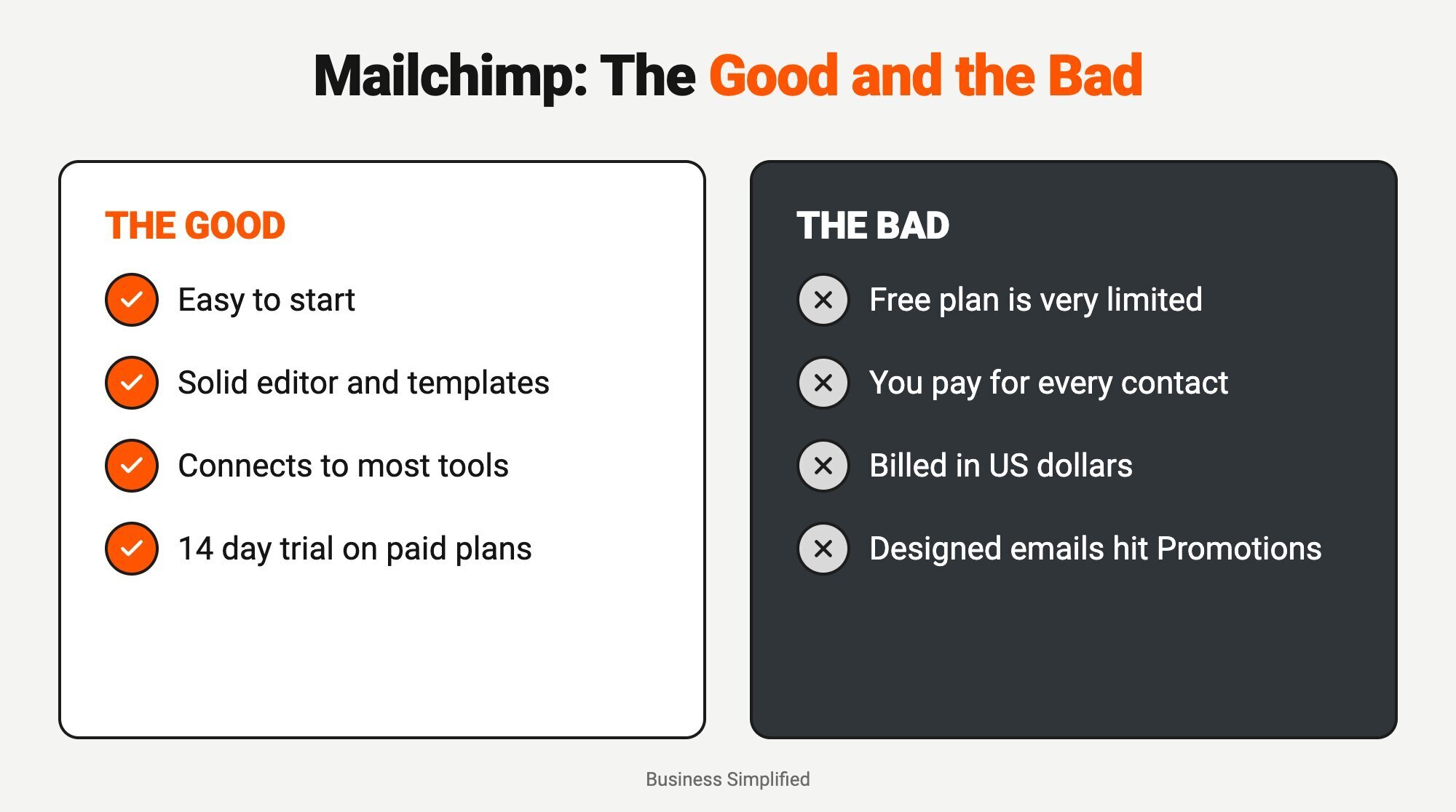
- It's easy. You can build and send a decent looking email in an afternoon without help.
- Templates and editor. The drag and drop editor is solid and the templates look professional.
- Integrations. It connects with most website builders, ecommerce platforms and CRMs.
- Free trial on paid plans. Essentials and Standard come with a 14 day trial, so you can test it properly.
- Familiar. Freelancers and VAs usually know it already, which saves training time.
What's frustrating about Mailchimp
- The free plan is now very limited. 250 contacts, no automation and Mailchimp branding. Fine for testing, not for running a business.
- Costs climb with your list. You pay for contacts, not just sends. Old, unengaged contacts quietly cost you money unless you clean the list.
- Billed in dollars. Your monthly cost moves with the exchange rate, and you'll want to check how VAT is handled on your invoice.
- Designed emails can land in Promotions. Heavy templates with lots of images often look like marketing, and Gmail treats them that way. Plain, personal looking emails from a real person tend to do better in the primary inbox.
- It's an email tool, not a sales system. It won't manage your pipeline or remind you to call the lead who just clicked three times.
Is email follow up your weak spot?
The Growth Engine Scorecard checks your follow up alongside your ideal customer, your message and founder dependency, then gives you a score out of 100 and a £ figure for what it's costing you.
Mailchimp vs the alternatives
I'll keep this to tools I've actually run a business on.
HubSpot includes email inside a CRM, so you can see every email next to the deal and the contact. It costs more, but if you want sales and marketing in one place it's worth a look. Read my HubSpot Starter review.
ClickFunnels 2.0 bundles email with landing pages, funnels and checkout. That's why Business Simplified runs on it: the opt in, the follow up emails and the offer all live in one place. It's priced in dollars too. See my ClickFunnels 2.0 review.
AWeber is a straightforward email tool that does the job. Similar territory to Mailchimp.
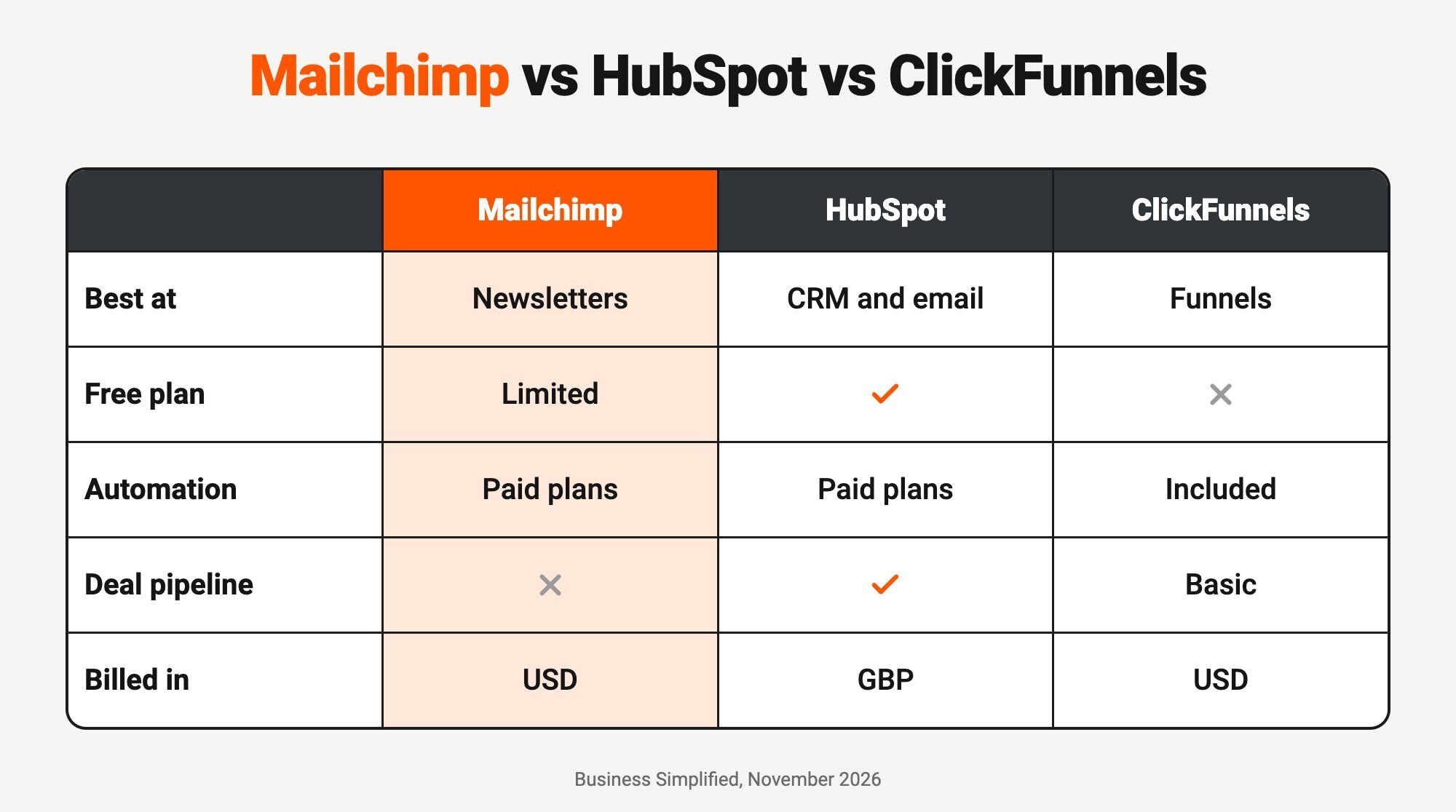
| Mailchimp | HubSpot | ClickFunnels 2.0 | |
|---|---|---|---|
| Best at | Simple email marketing | CRM plus email | Funnels plus email |
| Free plan | Yes, very limited | Yes | No, trial only |
| Automation | Paid plans | Paid plans | Included |
| Pipeline and deals | No | Yes | Basic |
| Billed in | USD | GBP | USD |
Who Mailchimp suits, and who should skip it
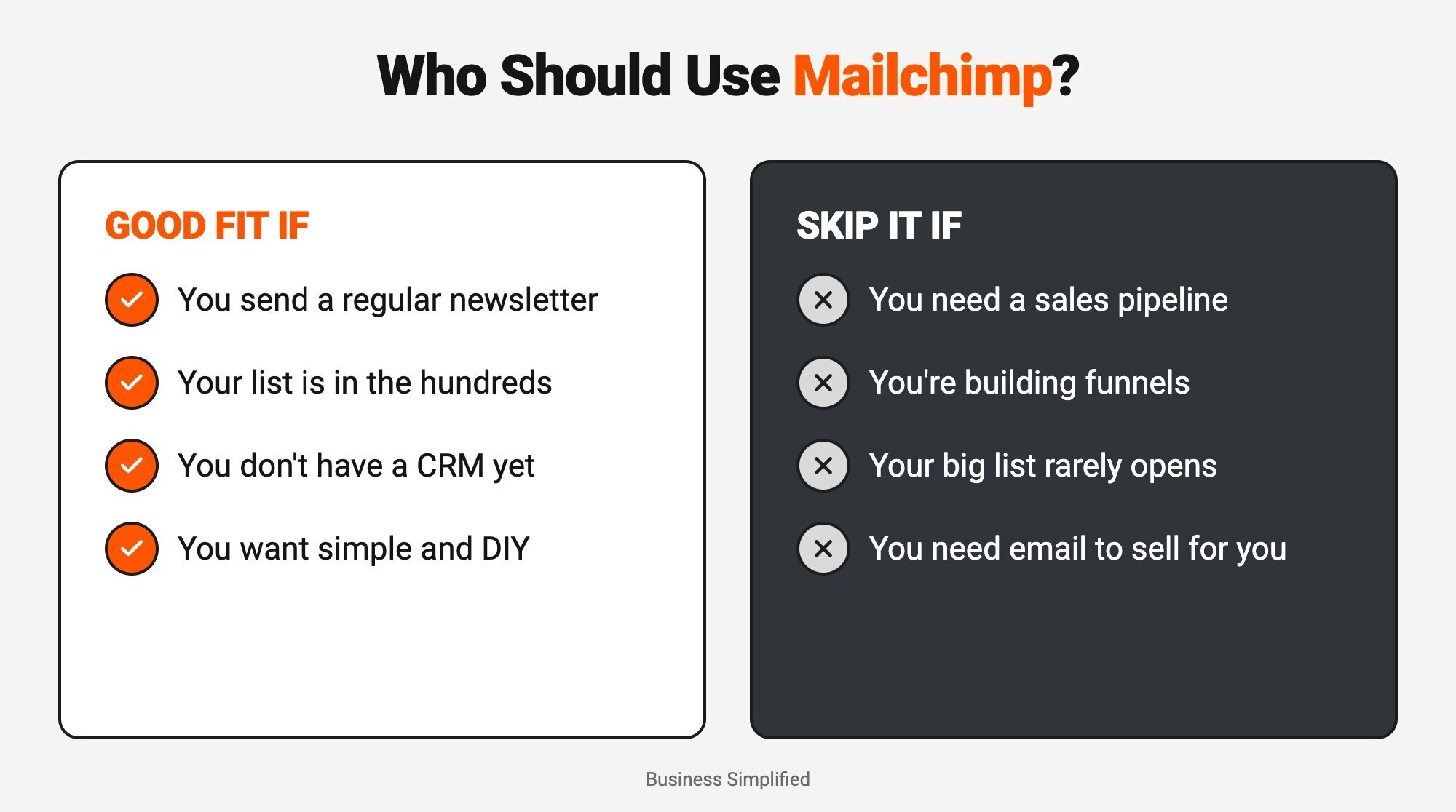
Mailchimp is a good fit if you want to send a regular newsletter, your list is a few hundred to a few thousand people, you don't have a CRM and you want something simple you can run yourself.
Skip it if you need email tied to a sales pipeline, you're building funnels with landing pages and offers, or your list is big and mostly unengaged (you'll pay for every one of them). Also skip it if you think the tool is the problem. Usually it's what you're sending, or that you're not sending anything at all.
That last point matters most. The best email tool in the world won't help if you don't have a reason for people to join your list and a sequence that follows up without you. I explain how that fits together in how to create a lead generation process, and the ideas for getting people onto your list are in the best lead magnet ideas.
My verdict
Mailchimp is a good, simple email tool that's become more expensive and less generous on its free plan. For a newsletter, it's fine. For a growth system where every email is meant to move someone closer to buying, I'd look at a tool that ties email to your pipeline or your funnel. More honest tool reviews are in Tools Tested.
How to get more from Mailchimp if you already use it
If you're already on Mailchimp, switching might not be the answer. These changes usually make a bigger difference than a new tool.
- Clean your list. Archive contacts who haven't opened anything in six months. You stop paying for them, and your engagement rates improve, which helps your emails land in the inbox.
- Send from a person. Use your name as the sender, not your company name, and a real reply address you're happy to use.
- Write plainer emails. Fewer images, fewer buttons, more words that sound like you. Personal emails tend to get treated as personal.
- Authenticate your domain. Set up the sender authentication Mailchimp asks for. It's a one off job with your domain provider and it matters.
- Set up one automated sequence. A welcome sequence for new subscribers is the single most valuable thing most small businesses never build. That needs a paid plan.
- Give every email one job. One link, one ask. Just like a landing page.
Do those six things and you'll get far more out of Mailchimp than most businesses do. If you still find yourself wanting pipeline tracking or funnels, that's when it's time to move.
Frequently asked questions
Is Mailchimp good for small businesses?
Yes, for simple email newsletters. It's easy to use and integrates with most tools. It's less suited to businesses that need email tied to a sales pipeline or funnel.
Is Mailchimp still free?
There's a free plan, but it's limited to 250 contacts and 500 sends a month, with no automation and Mailchimp branding on emails.
How much does Mailchimp cost in the UK?
Mailchimp prices in US dollars by contact count. A 2025 UK guide listed Essentials at about £9.71 a month and Standard at about £14.93 a month for 500 contacts. Check the live pricing page as it changes.
Why do my Mailchimp emails go to Promotions?
Image heavy, designed templates look like marketing to Gmail. Plainer, personal emails from a named person tend to land better. Sender setup and engagement also matter.
What's a good alternative to Mailchimp?
HubSpot if you want email inside a CRM, ClickFunnels if you're building funnels, or AWeber for simple email marketing.
Take the Growth Engine Scorecard
The tool is rarely the real problem. Find out what is. 17 quick questions, about three minutes, with your score out of 100 and a £ estimate of the revenue your setup is leaving on the table.

Hi, we are Business Simplified
Growth shouldn’t depend on you chasing every lead. Business Simplified uses real data to fix your pipeline, increase leads and improve sales, so you can lead your business instead of being trapped running it.
Get Our Growth Engine White Paper
We surveyed 186 UK businesses to find out what growth strategies actually work
We published those findings in our "Growth Engine" whitepaper. You can get a copy here.