Download my Whitepaper here:
By clicking submit, you agree to receive promotional emails and weekly content from Company.

Inbound vs Outbound Lead Generation: Which Wins?
Monday, November 09, 2026
One camp says cold outreach is dead. The other says content is a slow way to go broke. Both are selling you something. Here's the honest comparison for a UK founder.
Your pipeline is quiet again. Somebody on LinkedIn says you need to post every day and let the leads come to you. Somebody else says that's nonsense, just pick up the phone and send more emails. You've got neither the time nor the patience to test both properly, so you end up doing a bit of each, badly.
Inbound vs outbound lead generation is one of the oldest arguments in sales. And the real answer is not "pick one". It's knowing which one to start with for your business, right now, and how they work together.
In this blog I'll explain what inbound and outbound actually mean, what each costs, how fast each works, the honest drawbacks of both, and a clear verdict on which you should build first.
Inbound vs outbound lead generation: what's the difference?
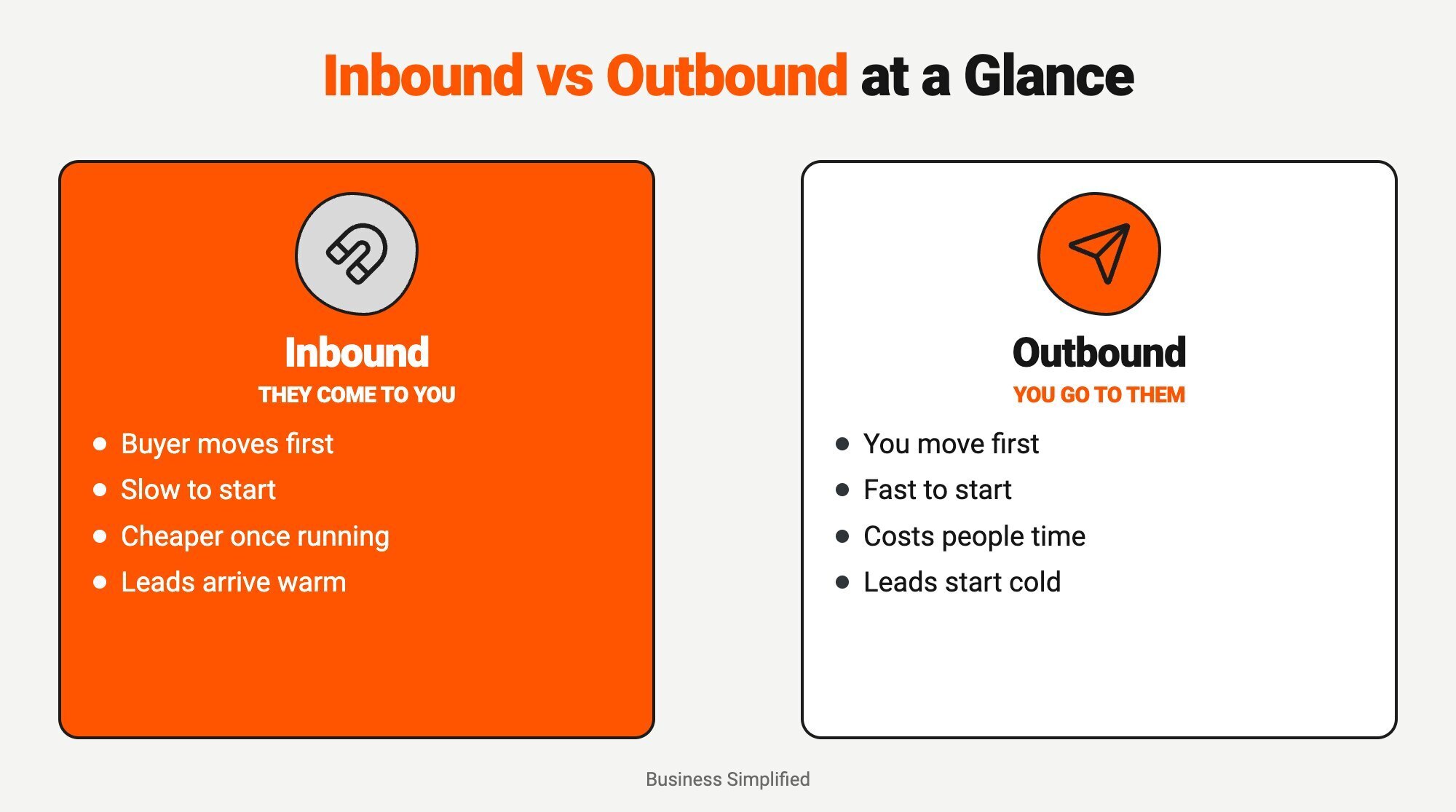
Inbound is when the buyer comes to you. They find your content, your website, an ad or a referral, and raise their hand. Think SEO, social media, a lead magnet, YouTube, email newsletters.
Outbound is when you go to the buyer first. You pick who you want and contact them. Think cold email, cold calling, LinkedIn outreach, events and direct mail.
Paid ads sit in between. You're paying to get in front of people, but they still choose to respond. I count ads as inbound here because the buyer makes the first move.
What does each one cost?
The most quoted stat on this comes from HubSpot, which found that businesses focused on inbound had a 62% lower cost per lead than those focused on outbound. Two big caveats. That data is from 2011, and HubSpot sells inbound software. So take it as a direction, not a law.
More recent UK figures compiled by Whito put Meta ad leads at roughly £10 to £45 and Google Ads leads at roughly £25 to £90. For outbound, the main cost is people. Someone has to find the contacts, write the messages and follow up. I've worked through what a salesperson really costs in the real cost of hiring a salesperson in the UK.
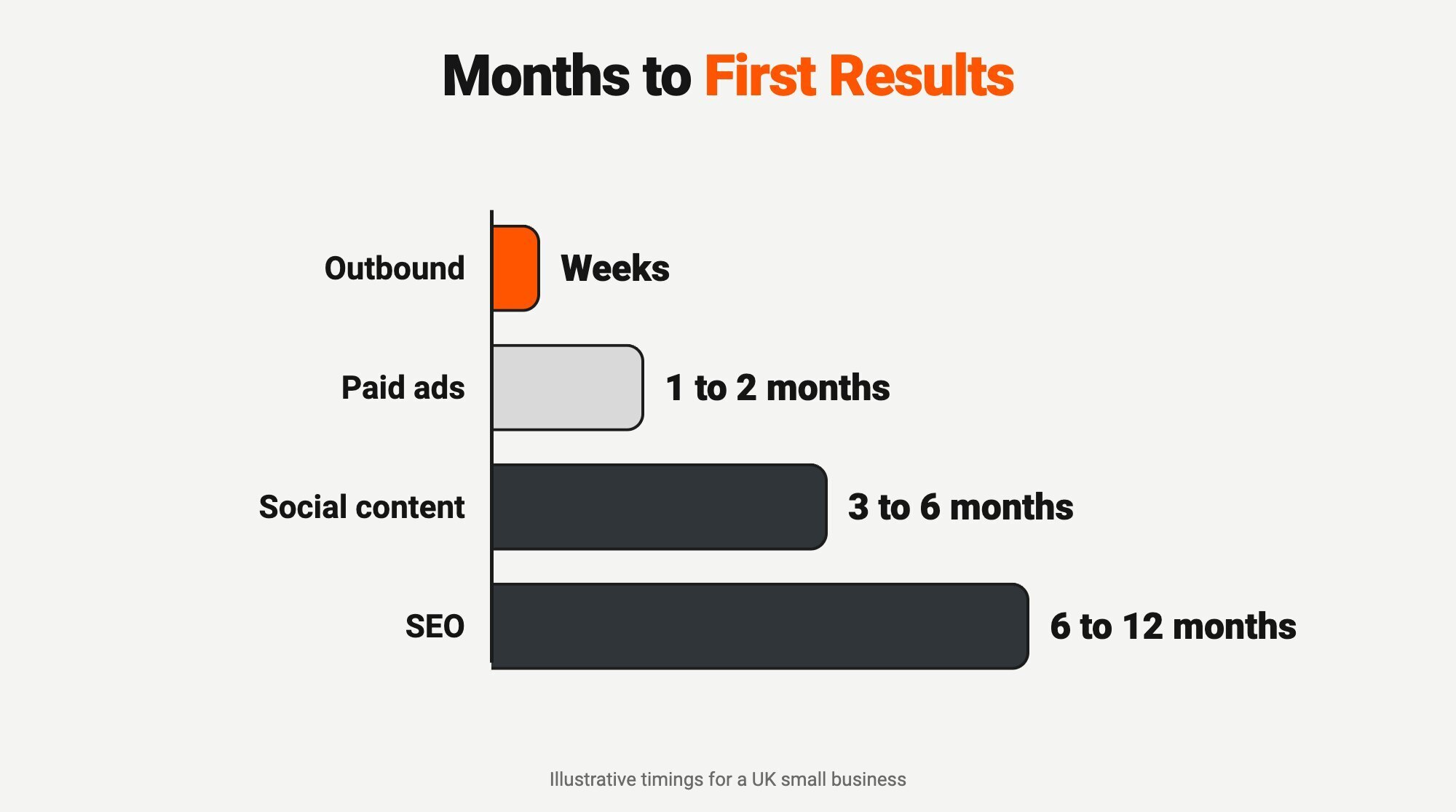
The honest summary: inbound is cheaper per lead once it's running, but it costs a lot of time before it runs. Outbound costs more per lead but you can switch it on this week.
How fast does each one work?
Outbound wins on speed. Send 100 well targeted emails on Monday and you'll know by Friday whether the message lands. Published cold email studies tend to show reply rates in the mid single digits, roughly 5% to 9%, with tightly targeted campaigns doing better.
Inbound is slow, then fast. Content takes months to build momentum. SEO can take longer. But once it's working, it keeps working while you sleep, and the leads arrive already warm because they've read your stuff.
Which engine is missing in your business?
The Growth Engine Scorecard benchmarks you against 186 UK business owners and shows whether your problem is finding leads, converting them or following up.
The honest drawbacks of inbound
- It's slow. If you need revenue next month, inbound alone won't get you there.
- It needs consistency. I post twice a day per platform and batch record eight videos a month. That's a system, not a burst of enthusiasm.
- You don't choose who turns up. You'll attract people who aren't a fit, and you'll need a way to sort them.
- Most people who see you won't follow you. In my own numbers, 69% of the people who see my content don't follow me. You have to give them a reason to take a step.
The honest drawbacks of outbound
- It's a numbers game. Most people won't reply. You need volume and a thick skin.
- It depends on people. When the person doing the outreach is busy, ill or leaves, the pipeline stops.
- It can damage your brand. Lazy, spammy outreach gets you remembered for the wrong reasons.
- The rules matter. In the UK, B2B email and calling are covered by PECR and UK GDPR. Check the ICO's guidance before you start.
- It often lands back on the founder. In our survey of 186 UK owners, 77% still personally won most new business.
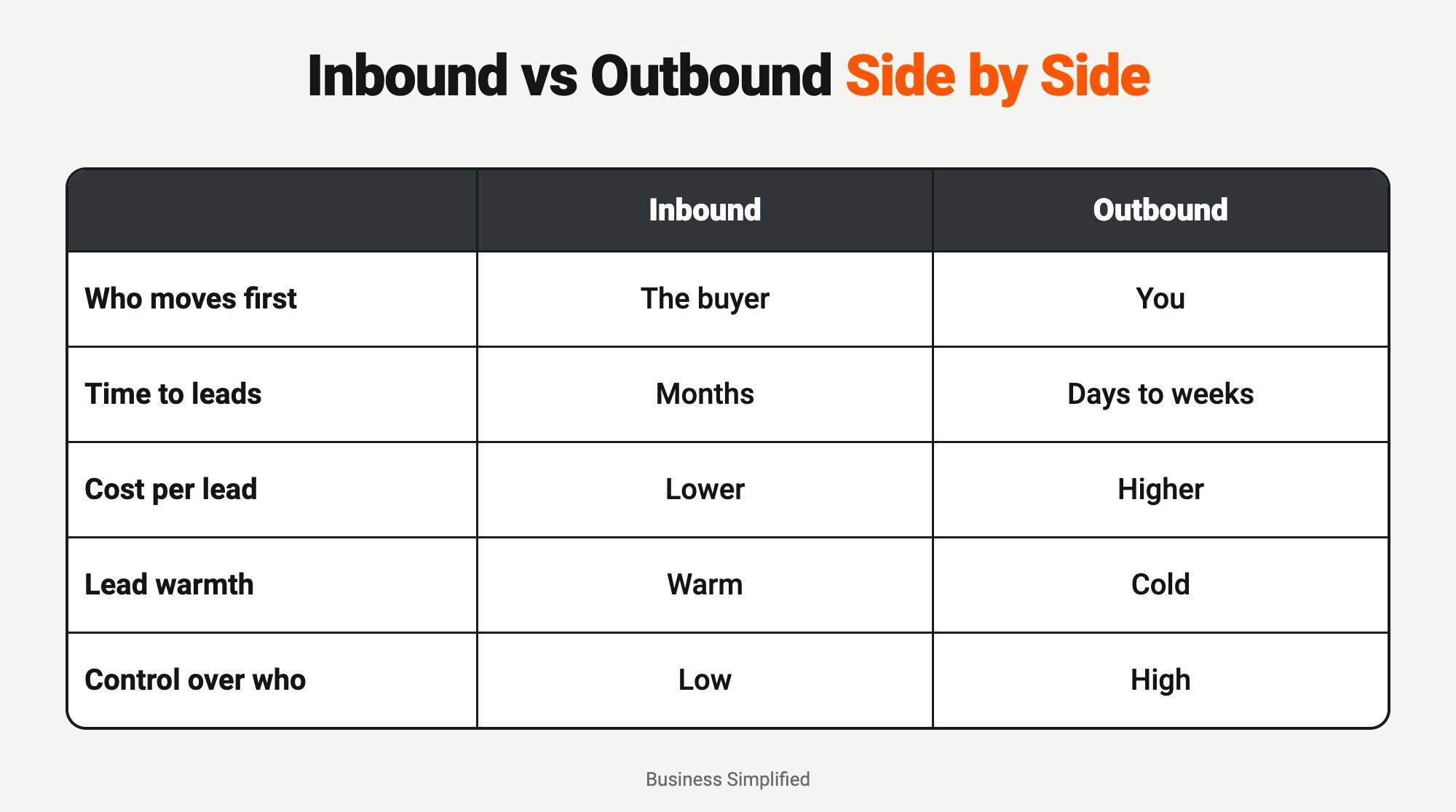
Inbound vs outbound side by side
| Inbound | Outbound | |
|---|---|---|
| Who moves first | The buyer | You |
| Time to first leads | Months | Days to weeks |
| Cost per lead | Lower once running | Higher, mostly people time |
| Lead warmth | Warm, they chose you | Cold, you chose them |
| Control over who | Low | High |
| Keeps working if you stop | For a while | No |
The verdict: which should you build first?
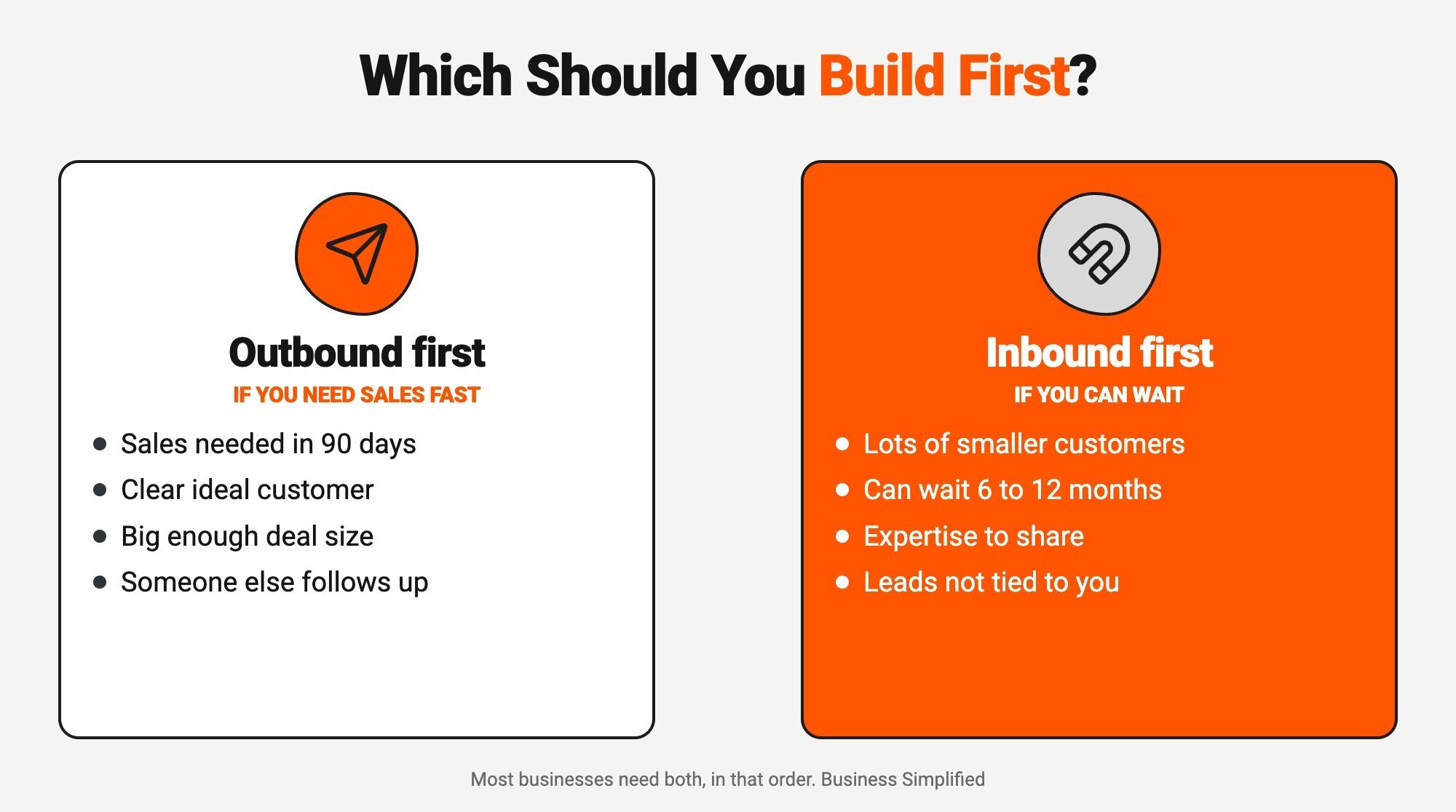
Choose outbound first if you need sales in the next 90 days, you know exactly who your ideal customer is, your deal size is big enough to justify personal attention, and someone other than you can do the follow up.
Choose inbound first if you sell to lots of smaller customers, you're happy to play a 6 to 12 month game, you've got expertise you can share, and you want leads that don't depend on one person's diary.
For most UK founders I work with, the answer is both, in that order. Use outbound to keep the lights on and learn what message lands. Feed everything you learn into inbound so it gets cheaper over time. The connecting piece is the same: a useful offer that turns a stranger into a lead, and follow up that runs without you. That's the machine I describe in how to build a lead generation machine that runs without you.
If you're deciding whether to hire for this or outsource it, read hire a salesperson or outsource lead generation. More comparisons like this live in Head to Head.
How to run both without it landing on you
The fear with doing both is that you end up doing neither properly, and everything still runs through your diary. Here's a simple weekly rhythm that keeps both moving without you being the bottleneck.
- Outbound: a fixed daily number. Pick a small, repeatable target, say ten personalised messages a day to people who fit your ideal customer. Same time every day. If someone else can do it, give it to them with a script and a list.
- Inbound: batch it. Don't create content every day. Record or write once a week, then schedule it. That's how I keep posting twice a day without it eating my week.
- One shared offer. Both routes should lead to the same next step: a lead magnet, then a conversation. That way outbound replies and inbound sign ups land in the same place.
- One follow up system. Every new lead, wherever it came from, goes into the same automatic email sequence. Nobody relies on memory.
- One weekly number. Track conversations booked, not likes or emails sent. That's the number that tells you whether either approach is working.
After eight to twelve weeks you'll have real data. You'll know your reply rate, your sign up rate and which message lands. Then double down on whichever route gives you the cheapest conversations, and keep the other ticking over.
One warning. Don't judge inbound on outbound's timescale. If you post for four weeks, see nothing and give up, you've paid the cost and missed the return. Give it at least six months of consistency before you decide.
Frequently asked questions
Is inbound or outbound lead generation better?
Neither is better in every case. Outbound is faster to start and gives you control over who you contact. Inbound is slower but cheaper per lead once it's running. Most small businesses need both.
Is inbound cheaper than outbound?
Usually per lead, once it's working. HubSpot's 2011 data showed a 62% lower cost per lead for inbound focused businesses, though that data is old and comes from an inbound software company.
Is cold email legal in the UK?
B2B cold email to corporate addresses is generally allowed under PECR if you identify yourself and offer an easy opt out, but UK GDPR still applies. Check the ICO's guidance or take advice.
Is paid advertising inbound or outbound?
It sits in between. You pay to get in front of people, but they choose to respond, so it behaves more like inbound.
Which should a small business start with?
If you need sales in the next three months, start with outbound. If you can wait and want leads that compound, start with inbound. Then add the other.
Take the Growth Engine Scorecard
Find out whether your growth problem is finding leads, converting them or following up. 17 quick questions, an instant score out of 100 and a £ estimate of what it's costing you. Free.

Hi, we are Business Simplified
Growth shouldn’t depend on you chasing every lead. Business Simplified uses real data to fix your pipeline, increase leads and improve sales, so you can lead your business instead of being trapped running it.
Get Our Growth Engine White Paper
We surveyed 186 UK businesses to find out what growth strategies actually work
We published those findings in our "Growth Engine" whitepaper. You can get a copy here.