Download my Whitepaper here:
By clicking submit, you agree to receive promotional emails and weekly content from Company.

The Real Cost of Hiring a Salesperson in the UK
Wednesday, November 04, 2026

Salary is only the start. Here's the full year one maths on the cost of hiring a salesperson in the UK, including National Insurance, commission, ramp up time and what a bad hire really costs you.
Every founder hits the same wall. You're winning most of the work yourself, you're at capacity, and the obvious answer is to hire a salesperson. Someone else can go and find the clients while you run the business.
I know, because I did exactly that. I'd grown SPOR to about £5m in about three years, then got stuck trying to reach £7.5m. So I hired a sales team. What actually happened is I stopped being a seller and became a manager of sellers. We went round in circles for two years.
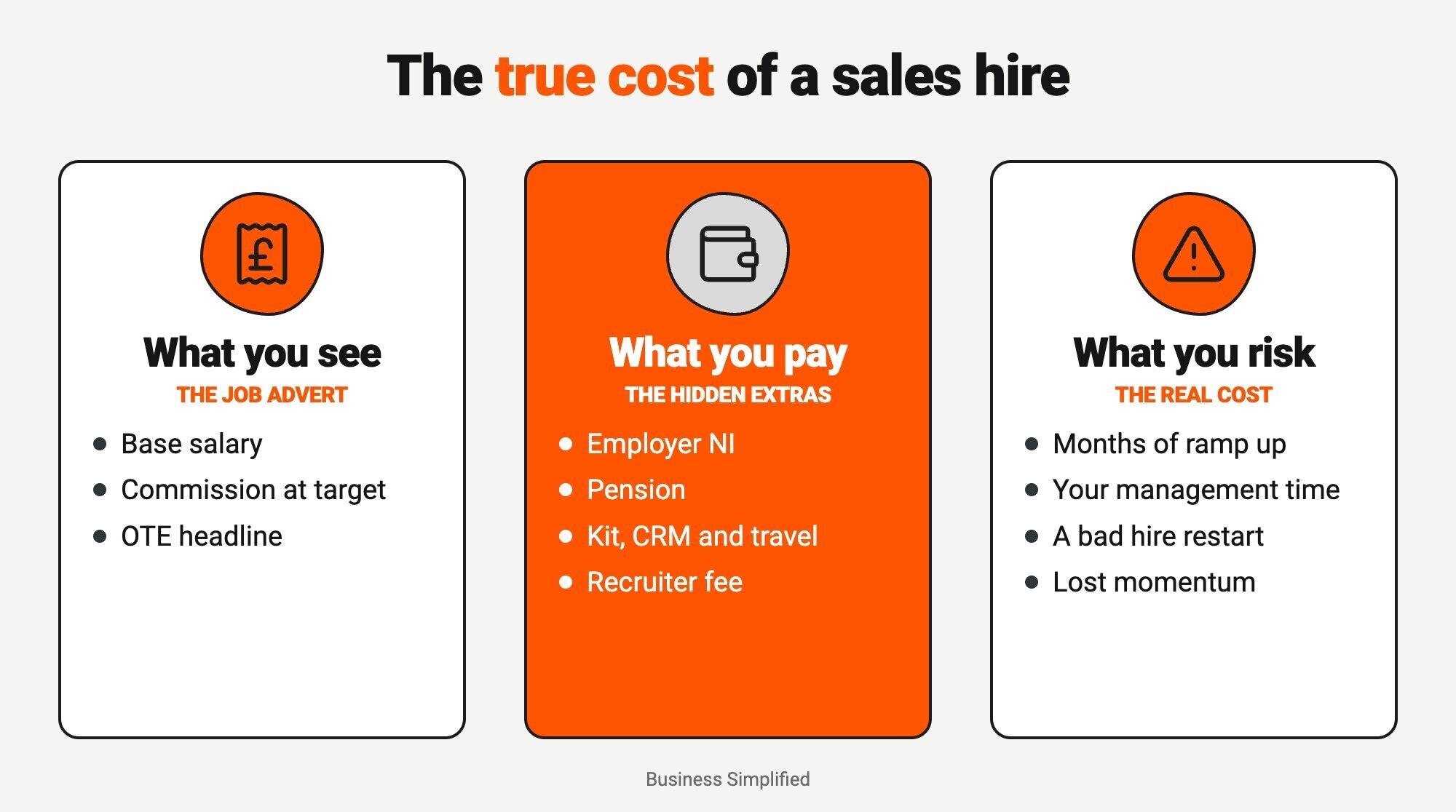
The cost of hiring a salesperson in the UK isn't the salary on the job advert. It's the salary, plus the tax, plus the commission, plus the months before they sell anything, plus your time, plus the risk it doesn't work out.
In this blog I'll walk through the real UK numbers, show you the full year one maths line by line, explain how OTE works, and help you decide whether a sales hire is actually the right move yet.
What does a salesperson cost in the UK? Start with the salary
The median advertised salary for a B2B sales executive in the UK is £31,000, based on vacancies in the six months to November 2026 (IT Jobs Watch). That's the middle of the market. Experienced people who can sell a complex service will cost more. Junior people will cost less and need more of your time.
On top of salary, you pay employer National Insurance. From April 2025, employer NICs are 15% on earnings above £5,000 a year (ICAEW). The same source confirms the Employment Allowance is £10,500, which may reduce your total employer NI bill if you're eligible. Ask your accountant whether you've already used it on your existing team before you count it against this hire.
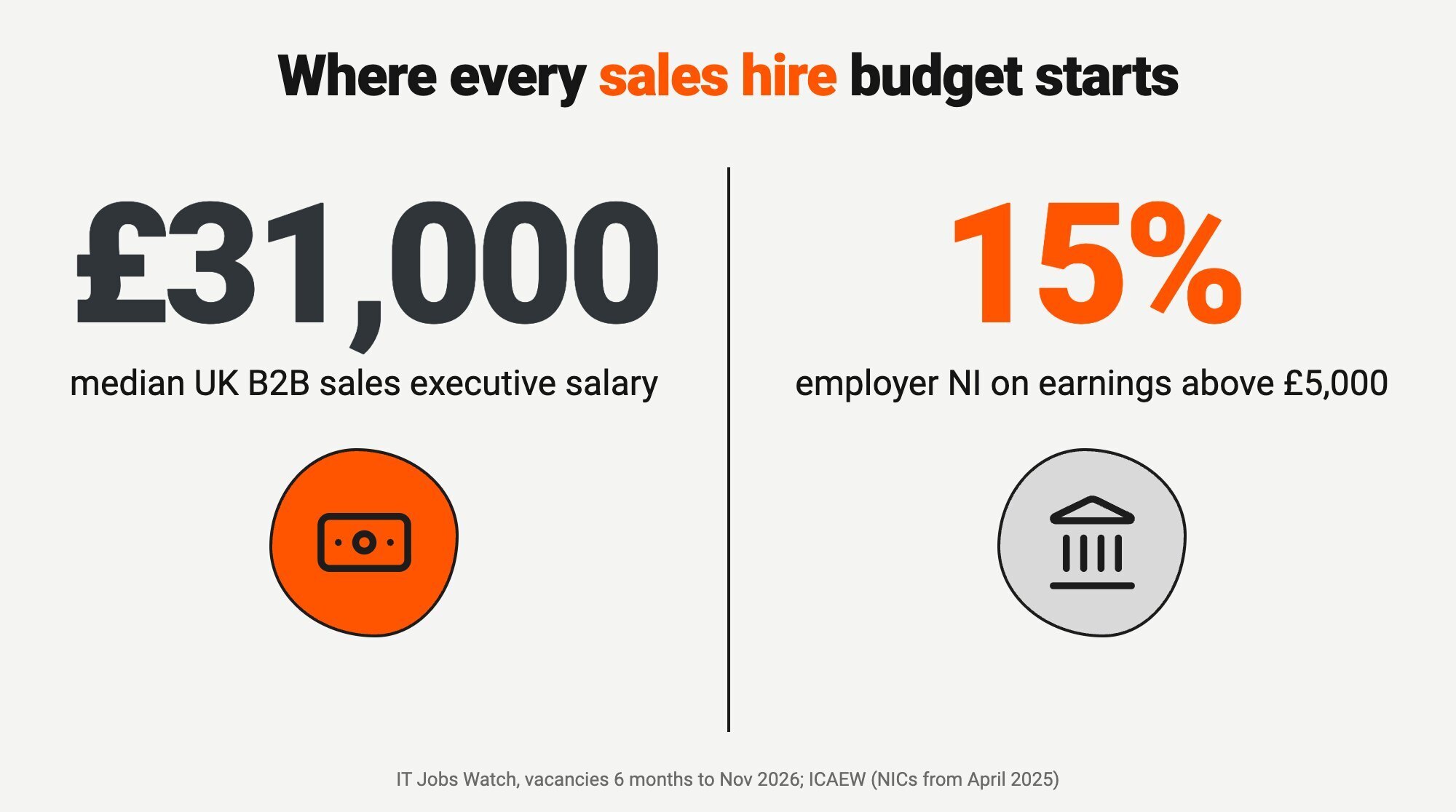
So on a £31,000 salary, employer NI comes to (£31,000 minus £5,000) x 15% = £3,900 a year. That's before you've paid a penny of commission.
The true cost of a sales hire: full year one maths
Here's a worked example for one B2B sales executive. Salary and NI use the figures above. Everything else is illustrative: plug in your own numbers.
| Cost line | Amount | Basis |
|---|---|---|
| Base salary | £31,000 | UK median (IT Jobs Watch) |
| Employer NI on salary | £3,900 | 15% above £5,000 (ICAEW) |
| Employer pension | £930 | Illustrative 3% of salary |
| Laptop, phone, CRM seat, travel | £3,000 | Illustrative |
| Recruiter fee | £6,200 | Illustrative 20% of salary |
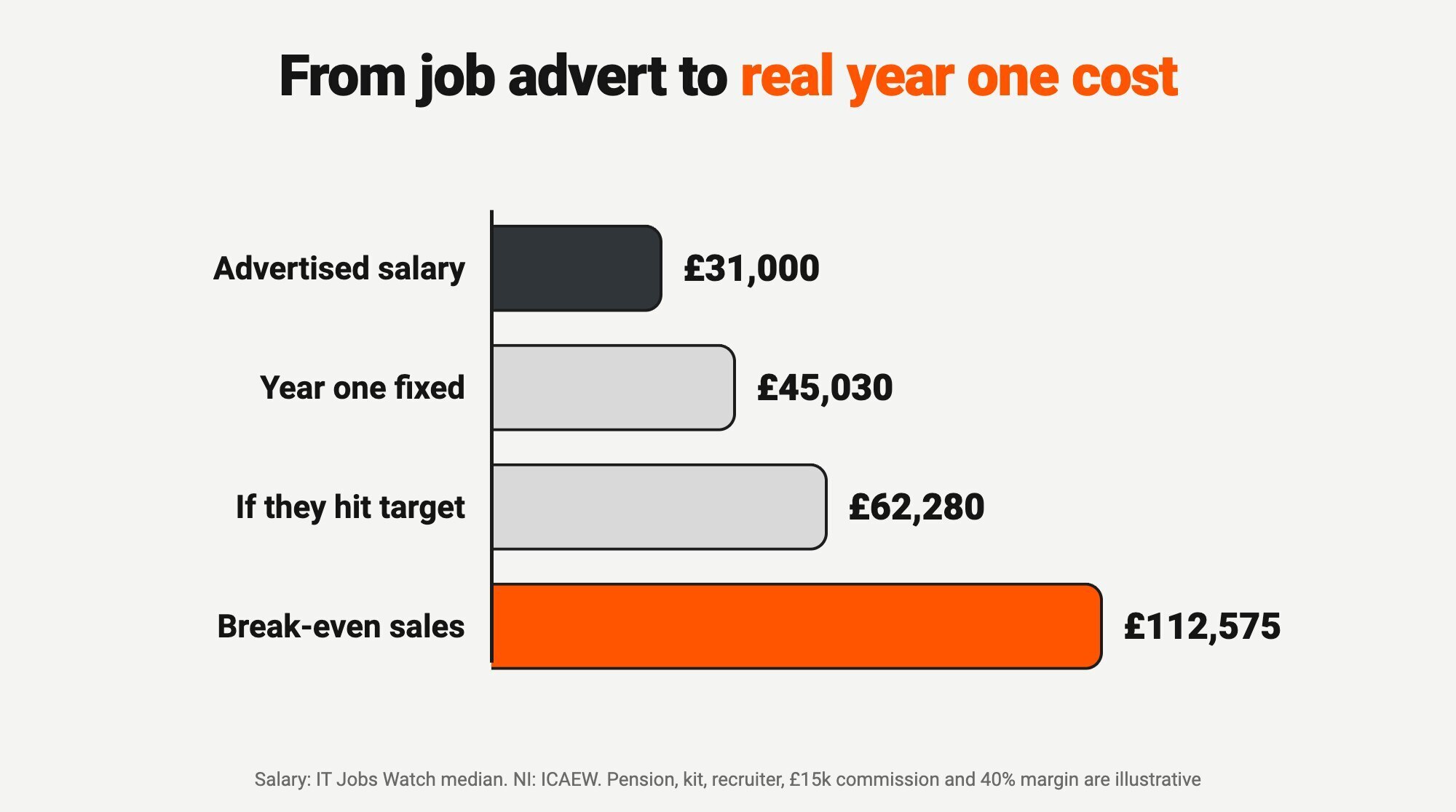
| Fixed cost, year one | £45,030 | Paid whether they sell or not |
| Commission at target | £15,000 | Illustrative |
| Employer NI on commission | £2,250 | 15% of £15,000 |
| Total if they hit target | £62,280 | Year one, all in |
That £31,000 job advert has become roughly £45,000 of fixed cost before a single sale. If they hit target, the total is over £62,000. And that's a good outcome, because commission only gets paid when they've sold something.
Now the uncomfortable sum. Say your gross margin is 40% (illustrative). To cover £45,030 of fixed cost, they need to sell £45,030 divided by 0.4 = £112,575 of work just to break even on the fixed cost. Commission is extra on top of that.
The cost nobody puts in the spreadsheet: your time
A new salesperson needs managing. Onboarding, pipeline reviews, call coaching, joining them on the big meetings. Say that's 4 hours a week of your time (illustrative). That's around 200 hours a year that you're not spending selling yourself. Given that 77% of owners still personally win most new business (The Growth Engine, Business Simplified, 2026), those are probably your most valuable hours. That's exactly the trap I fell into.
Should you hire, or build the machine first?
The Growth Engine surveyed 186 UK owners turning over £100k to £5m. It shows why 77% still win most of the work themselves, and what to build so a sales hire has something to sell into.
OTE explained (UK): how the split works
OTE means On Target Earnings. It's base salary plus the commission someone earns if they hit their target. In my example, OTE is £31,000 base plus £15,000 commission = £46,000.
There's no legal standard for how OTE is split, and splits vary a lot by role and industry, so I won't pretend there's one right answer. My view:
- More base, less commission suits long sales cycles and complex deals, where it might take months to close anything.
- Less base, more commission suits shorter, more transactional sales, where effort shows up in results quickly.
- Watch out for OTE that nobody has ever hit. If your target is a fantasy, good people will work it out and leave.
Also check whether commission is paid on booked revenue or on cash received. Paying on cash protects you if a client doesn't pay.
Sales hire ramp up time: how long until they pay for themselves?
This is where most founders get caught out. A new salesperson doesn't sell in month one. They need to learn your service, your clients, your pricing and your process. Then they need to build a pipeline. Then that pipeline needs time to close.
Here's an illustrative ramp for a B2B service business with a three month sales cycle:
- Months 1 to 2: learning, shadowing, building a list. Close to zero sales.
- Months 3 to 6: first deals close, usually ones you helped with.
- Months 7 to 12: heading towards full productivity, if things are going well.
On that timeline you've spent about half the year's fixed cost, roughly £22,500, before they're anywhere near target. If your sales cycle is longer, stretch everything out. It's very common for a hire to take most of a year to pay for itself, so make sure you have the cash to carry them.
What does a bad sales hire cost in the UK?
Now the scenario nobody likes to model. You hire, it doesn't work, and you part ways at month six. Again, these are illustrative numbers built on the table above, treating costs as spread evenly across the year for simplicity:
- Six months of salary, NI, pension and kit: about £19,400
- Recruiter fee you've now lost: £6,200
- A second recruiter fee to replace them: £6,200
- Total: roughly £31,800, before you count your management time, the deals that went quiet and the six months you've lost
The time is the expensive bit. Six months later, you're back where you started, only more tired.
Why most first sales hires fail
In my experience it's rarely because the person was rubbish. It's usually because the business wasn't ready. There's no steady flow of leads, no clear message, no defined process, and the founder is still the only person who really knows how to sell the thing. You can't hand over a system that only exists in your head. That's a big reason 98% of UK businesses never reach £1m.
Who should NOT hire a salesperson yet
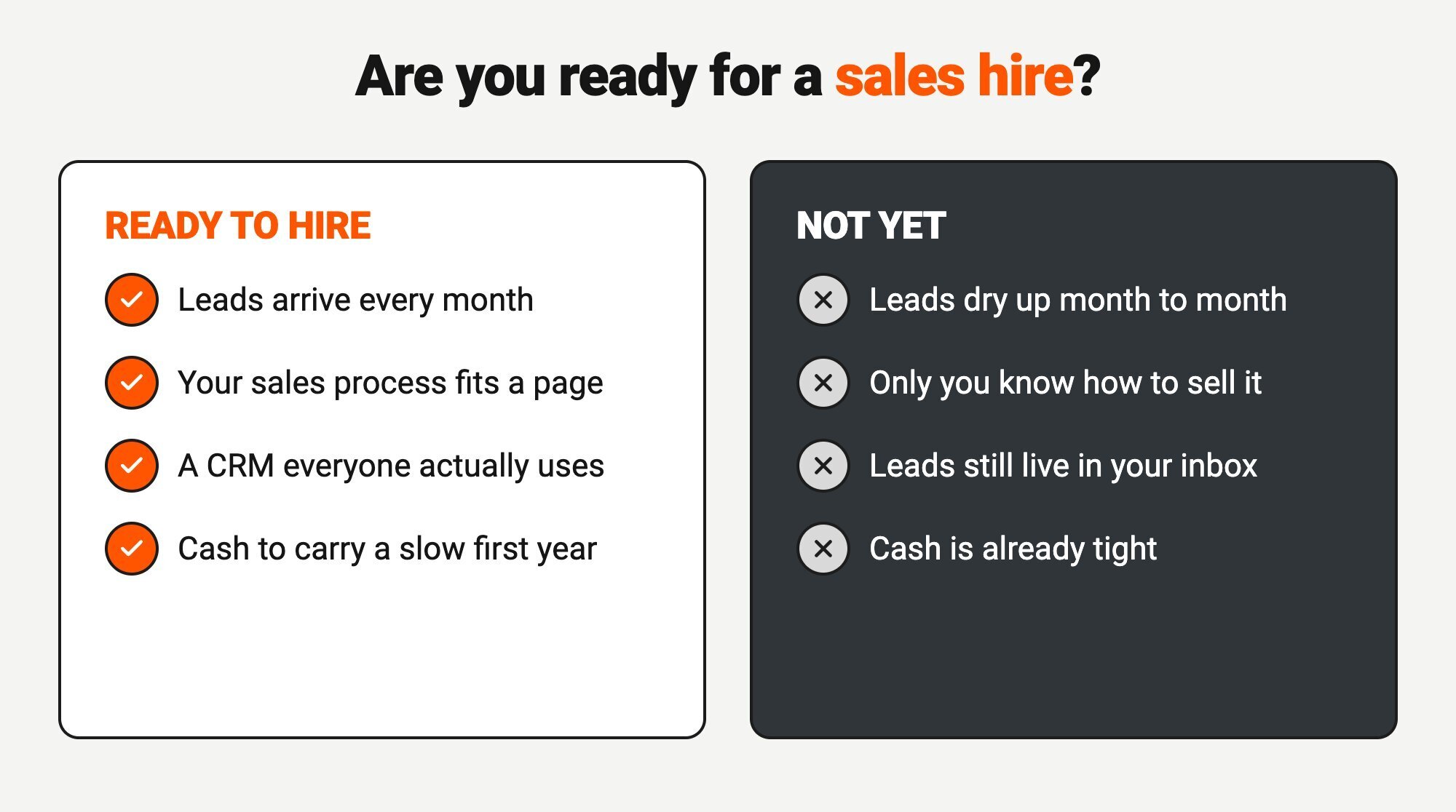
- You can't carry £45,000 or so of fixed cost for most of a year without it hurting.
- You don't have a steady supply of leads. A salesperson with nothing to work will spend their time cold calling, and you'll be paying for it.
- You can't explain your sales process on one page. If you can't write it down, you can't hand it over.
- You haven't got a CRM. Start there. My HubSpot Starter review covers what we use at SPOR.
If that's you, there are other routes. Compare the options in hire a salesperson or outsource lead generation, or consider whether senior part time help makes more sense in fractional sales director vs full time. And if you'd rather put the money into marketing first, here's how much a small business should spend on marketing.
Build the lead flow first, then hire someone to work it. That's the order. I set out how in how to create a lead generation process.
So what's the real cost of hiring a salesperson in the UK?
On a median £31,000 salary, expect around £45,000 of fixed cost in year one once you add employer NI, pension, kit and a recruiter, and over £62,000 if they hit an illustrative £15,000 commission target. Plan for most of a year before they pay for themselves, and budget for the chance it doesn't work.
None of that means don't hire. It means hire when the business is ready to feed them. For more honest numbers, see the rest of What Growth Costs.
Frequently asked questions
What is the average sales salary in the UK?
The median advertised salary for a UK B2B sales executive is £31,000, based on vacancies in the six months to November 2026 (IT Jobs Watch). Senior and specialist roles pay more.
What does a salesperson cost on top of salary?
Employer NI at 15% above £5,000 a year, pension, equipment and software, recruitment fees and commission. In my illustrative example, a £31,000 salary becomes about £45,000 of fixed cost in year one.
How long until a salesperson pays for themselves?
It depends on your sales cycle. With a three month cycle, an illustrative ramp sees first deals around months 3 to 6 and full productivity later in the year. Longer cycles take longer.
What is a typical OTE split?
There's no standard split. Longer, complex sales usually suit a higher base and lower commission. Shorter, transactional sales suit more commission. Make sure the target is realistic.
What does a bad sales hire cost?
In my illustrative example, parting ways at month six costs roughly £31,800 including two recruiter fees, before you count your own time and the six months of lost momentum.
Download The Growth Engine
Before you hire, find out which growth ceiling you're stuck at. The Growth Engine shows how Squaredot grew from £800k to £1.2m in three months, with work from cold leads rising from 6% to 59%, by building the system first.

Hi, we are Business Simplified
Growth shouldn’t depend on you chasing every lead. Business Simplified uses real data to fix your pipeline, increase leads and improve sales, so you can lead your business instead of being trapped running it.
Get Our Growth Engine White Paper
We surveyed 186 UK businesses to find out what growth strategies actually work
We published those findings in our "Growth Engine" whitepaper. You can get a copy here.